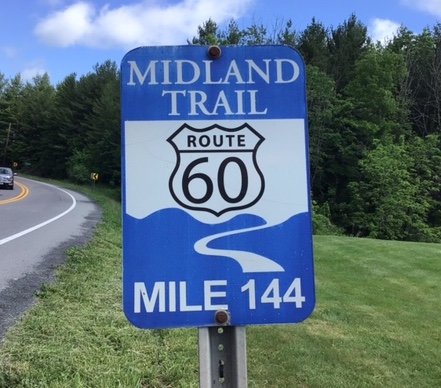
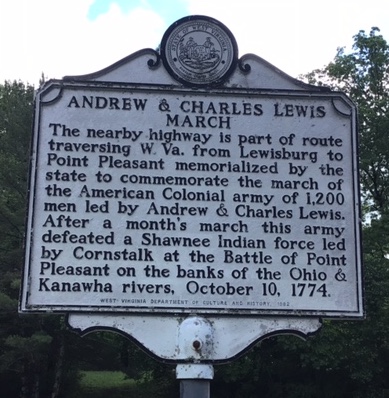
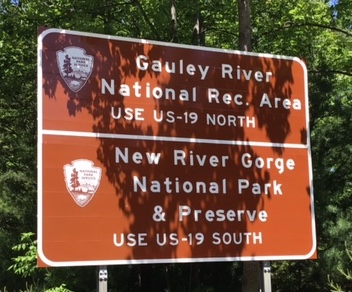
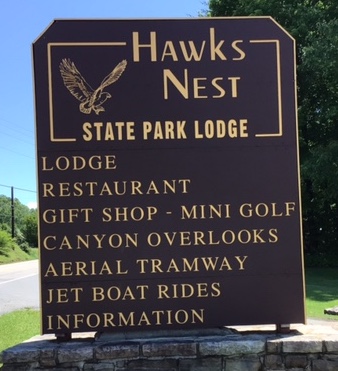
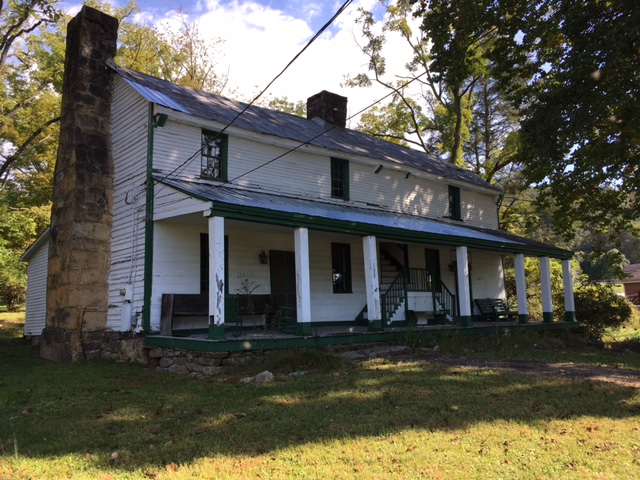
(Present-day West Virginia) On 8 March 1810, from Fincastle VA, William wrote Jonathan Clark, his brother. “….I have not much reason to Complain of my Suckcess or prospects, they are flattering as I Expected and not more so. My public accounts were all Settled- Govr. Lewis’s gave me Some trouble – and his neglecting to write our Journal has given me a great deel of trouble and expense – and will give me Still more.”(1) In Washington, William Clark did not look forward to a meeting with Secretary of War Eustis, a man he did not have confidence in, but the meeting went well. The rejected “Bills-of-Exchange” was no longer a concern to William Clark. However, the matter of Lewis’ accounts was not officially settled until 4 March 1812, when War Department Accountant William Simmons wrote, “I certify that there is due to the Estate of the late Merewither Lewis, deceased – the Sum of six hundred & thirty-six Dollars 25/100 being the balance of Account for disbursement made for the conveyance of the Mandan Chief, and his family to his Village on the Missouri River – including the Damages, Interest and Cost of Protest of three Bills of Exchange drawn by him on the Department, in May 1809”.(2) It took over 800 days to complete a statement settling a credit of $636.25. William Clark’s 8 March 1810, letter continues to be very revealing when Clark states, “I have made a bargain with Messer. A. Conrad & Co. Booksellers in Philadelphia publish the work, they are to pay all the expenses & to receive 20 pr. Cent- Docr. Bartin will write the Scientific part and I expect to get Mr. Biddle to write the naritiv- The map I Shall improv on myself.”(3) Unfortunately, William Clark’s trip to Philadelphia and the arrangements he made for editing the expedition journals and the related printing did not go as he had planned. Nicholas Biddle, after rejecting the opportunity to edit the journals, changed his mind, and traveled to Fincastle where he spent the better part of three week working with William Clark on the journals and understanding the story of exploration.(4) William Clark’s good fortune in securing Nicholas Biddle to edit the journals was an interesting turn of events going back to 1803. Biddle had graduated from Princeton at the age of 15 and became the secretary to Robert Livingston. In 1801 Livingston was appointed United States Minister to France. During the 1803, Livingston and Monroe negotiations for the Louisiana Purchase, 17-year-old Nicholas Biddle took part in the discussion with secretarial responsibilities.(5) Leaving Fincastle, Nicholas Biddle returned to Philadelphia and continued editing the journals. Biddle may be the first person to be inspired by the Lewis and Clark story. On 7 July 1810, Biddle reported to Clark, “….since my return to Philadelphia I have been engaged seven or eight and even more hours a day on your work”.(6) Biddle is fully engaged in the editing process and in addition to the lengthy notes taken in Fincastle writes Clark for additional information. He advises Clark that he has written to book sellers in France to secure books to further aid him in understanding the Lewis and Clark Exploration, and the Indians they met. Biddle is also reading the Patrick Gass Journal and John Ordway’s field note. Biddle likes the Ordway field notes better than the Gass Journal. To further aid Biddle, on 22 May 1810, Clark advised Biddle that George Shannon was being sent to Philadelphia to assist with the editing process.(7) Unfortunately, due to financial insecurity of the U. S. in general and specifically the publishing business, A. & C. Conrad Publishing Company went out of business followed by Bradford and Inskeep, the second editor secured by Biddle. Of the 2000 copies printed by Bradford and Inskeep, the first $500.00 was to be paid to General Clark. But like any bankruptcy, everything got messy and the creditors list was long.(8) To make the situation even worse, it appears Lucy Meriwether Lewis Marks believed there was a revenue stream from the journals. William Clark sent a copy of the “statement of accounts” to Mrs. Marks and requested her “assent to the arrangements” accepting the claim of creditors. William Clark and the Lewis family receive nothing from the publication of the Lewis and Clark Journals. Clark advised Jefferson of the same.(9) On 31 March 1816, William Clark wrote Nicholas Biddle from St. Louis. “I must request the favor of you to inform me what has been done with the Book specimens & c.” William Clark had not received a copy the published journals. He furthers states, “Doctr. Marks (the half Brother of Governor Lewis) has expressed to me in a letter some concern about his brother’s interest in the Books and asked of me for a power of atty. to receive the Books, I must request you to deliver to the order of his (Lewis’) Mother, Mrs. Marks, such Books Papers & C. as you may think Govr. Lewis Heirs should receive as least fully the one half of my part.”(10) William Clark continues to work on behalf of Meriwether Lewis’ estate to secure all financial resources and credit deserved by his partner in discovery, Meriwether Lewis, even at Clark’s own expense. Clark’s letter of 8 March 1810, to Jonathan Clark, his brother, gives us additional information about his work and return to St. Louis. “The Secty. Of War has no objection to my Delaying here (Fincastle, VA) until April to prepare my papers for the work to be written but I feel anxious to get to my place of residence and Shall Set out as Soon as I can fix and get off after the 1 st of April my rout will be land to the Canhaway (Kanawha), there take water and decend to the mouth of Ohio and assend the Mississippi ” (emphasis added).(11) Clark did not leave Fincastle, VA until after 15 April 1810. On the 15th, he wrote Henry Knox from Fincastle requesting approval of his 1810, Indian Department Budget and described his activities relevant to the Lewis and Clark Journals and their publication.(12) Using his carriage (see note 25, below) the Clark party would be following today’s US 220 from Fincastle, VA to US 60 at Clifton Forge, VA. Then west along US 60, the James River & Kanawha Turnpike. In 1913, the James River and Kanawha Turnpike became part of the transcontinental Midland Trail. Midland Trail Highway Marker – Credit: Lewis & Clark Trust They would have traveled through White Sulphur Springs, VA, established circa 1750. White Sulphur Springs’s elevation is 1875 feet, starting a steady incline to the top of the Allegheny Mountains. White Sulphur Springs is the home of the Greenbrier Resort near the Greenbrier River.(13) The White Sulphur Springs National Fish Hatchery is a free tour and provides recreational opportunities. fws.gov/fish-hatchery/white-sulphur-springs West Virginia’s Greenbriar River Trail is crossed by US 60 with a trail head near US 60. (14)(15) Lewisburg, WV, elevation of 2080 feet, has lots of charm with historic inns, antique shops, craft shops and dinning opportunities for every taste.(16) The communities of Clifton Forge, White Sulphur Springs and Lewisburg would have provided homes or taverns for the Clark Party to spend the night. Leaving Lewisburg, US 60 increases in elevation as it passes through Rainelle at elevation 2,405 feet, and becoming a true mountain road. At Alta, WV, intersection of US 60 and WV 12 (38°13.091 N 81° 25.585W), elevation 2,582 feet, there is a historical marker recognizing the Colonial Militia Army march to Point Pleasant, VA on the Ohio River, and the battle with Shawnee Indians.(17) Andrew Lewis Marker – Credit: Lewis & Clark Trust At this point their road generally start downgrade. For access to the New River Gorge National Park and Preserve from US 60, take US 19 South 5-miles. The Park is a wonderland of outdoor activities for all ages and interest. (18)(19) NPS New River Sign – Credit: Lewis & Clark Trust Hawks Nest State Park at Ansted, WV, over-looks the New River Gorge from an elevation of 1,257 feet. West Virginia’s Hawks Nest Park Lodge is an example of West Virginia’s hospitality. There is an overlook west of the lodge (38°.122197 -81°.127820) that explains why Clark could not use a boat until he traveled to Cedar Grove. Hawks Nest Park Sign – Credit: Lewis & Clark Trust The bucolic scenery in the West Virginia mountains has long been appreciated as a comfortable place to live and work. The Halfway House a.k.a. Tyree Tavern, originally built as a log house in 1800 could have been an overnight stop for the Clark party in 1810. William and Julia stopped at the “Halfway House/Tyree Tavern on 14 September 1819. The expense was $1.75. (20)(21) Halfway House – Credit: Lewis & Clark Trust The confluence of the New River and the Gauley River is the beginning of the Kanawha River (38.167815, -81.197079). The Kanawha River is a Euro American designation, American Indians described the New River and the Kanawha as one river. US 60, the Midland Trail, follows historic Indian Trails listed as part of number 31 and 48 in Indian Trails of the Southeast.(22) The exact location where William Clark purchased the boats for the water portion of the trip is uncertain. River transportation and boats moved people and products in the 1700 and 1800. Boatyards were a necessity part of the transportation system that shipped salt produced on the Kanawha River, especially Malden, VA. Now WV.(23) Did William and Julia purchase salt? Did they take the expensive mineral to Louisville too share it with the large Clark family? Salt springs on Campbell Creek were known to American Indians and used by large game animals for thousands of years. By 1814 the industry had grown significantly and wagons were transporting salt east along the James River and Kanawha Turnpike, later the Midland Trail. Today, J. Q. Dickinson Salt Works, Malden, WV produces salt through evaporation, like the methods used in 1810. (24)(25) J. Q. Dickinson Salt-Works (jqdsalt.com) By 1829 the salt industry needed 300 flat boats each year to transport salt to cities along the Ohio and Mississippi Rivers. Average cost of a flatboat in 1829 was $400.00, each. It would be reasonable to assume that at least one of the boats that William purchased had a cabin and stove to provided warmth and for cooking.(26) On 22 May, 1810, William Clark wrote Benjamin Smith Barton and Nicholas Biddle from Louisville, KY. The contents of the letters include Clark’s gratitude for Barton’s agreeing to write the “Scientific part of my work” and advising Biddle that George Shannon was on his way to Philadelphia to assist with editing the journals.(27) This confirms the Kanawha and middle section of the Ohio Rivers had been successfully floated. We are further able to follow the boat trip on the Ohio and Mississippi Rivers with William’s letter to Jonathan Clark written on 3 July 1810, “Opposite Kaskaskia” on the Mississippi River.(28) Clark describes the trip including the river, weather and people met along the trip from Louisville to St. Louis. He also advises that Rachel, the child of Scot and Chloe, “fell between the boats and drowned.” In addition to the tragedy loss of life, please notice that Clark said boats. Apparently, he had purchased two boats on the Kanawha or some other port along the rivers. Clark’s letter of 16 July 1810, to Jonathan Clark, says they arrive in St. Louis on 7 July.(29) William advises that Julia was sick and he has learned of the duplicity of the Frederick Bates, “I am at Some loss to determine how to act with this little animal whome I had mistaken as my friend, however I shall learn a little before I act.” William, Julia, Meriwether Lewis Clark, Scot, and Chloe had been away from St. Louis for over 10 months. During that time, he has learned of the death of Meriwether Lewis, settled his and Lewis’ rejected Bill-of-Exchange and started the editing and publication of the Lewis and Clark Journals; all while taking care of his family. The previous 10 months was in many ways as extreme and difficult as the 1803-1806 exploration across the lands west of the Mississippi River.
Sources
Images & Historic Sites
(1) Holmberg. James, Dear Brother: Letters from William Clark to Jonathan Clark , Yale University Press, New Haven, 2002, page 236.
(2) Jackson, Donald, Letters of the Lewis and Clark Expedition with related documents , University of IL Press, Urbana, 1978, Vol. 2, page 576.
(3) Holmberg, James, Dear Brother: Letters from William Clark to Jonathan Clark , Yale University Press, New Haven, 2002, page 236.
(4) Cutright, Paul Russell, A History of the Lewis and Clark Journals , University of Oklahoma Press, Norman, 1976, page 59.
(5) Campbell, Tom W., Two Fighters and Two Fines: Sketches of the Lives of Matthew Lyon and Andrew Jackson , Pioneer Publishing, Little Rock, 1941, page 446.
(6) Jackson, Donald, Letters of the Lewis and Clark Expedition with related documents, University of Illinois Press, Urbana, 1978, Vol. 2, page 550.
(7) Ibid, 549.
(8) Ibid, page 600-607.
(9) Ibid 629 & 630.
(10) Ibid. 609-610.
(11) Holmberg, James, Dear Bother: Letters from William Clark to Jonathan Clark , Yale University Press, New Haven, 2002, page 237.
(12) Jackson, Donald, Letters of the Lewis and Clark Expedition with related documents , University of Illinois Press, Urbana, 1978, page 546.
(13) https://wvtourism.com/company/greenbrier/
(14) https://www.fws.gov/fish-hatchery/white-sulphur-springs
(15) https://www.google.com/maps/place/Greenbrier+River+Trail,+West+Virginia/@37.7776439,-80.3651326,16z/ data=!4m5!3m4!1s0x884c7ce7441a9bcb:0x728dacf1f38ffb32!8m2!3d38.1065095!4d-80.1747426?hl=en-US
(16) https://visitlewisburgwv.com/staying/
(17) https://www.hmdb.org/m.asp?m=55819
(18) https://www.nps.gov/neri/planyourvisit/maps.htm
(19) https://www.nps.gov/neri/index.htm
(20) https://www.nps.gov/places/the-tyree-house.htm
(21) Clark, William, Journal of trip to Washington, November 1817-March 1820 | Missouri Historical Society (mohistory.org) , Page 34
(22) Meyer, William E., Indian Trails of the Southeast: Extract from the Forty-Second Annual Report of the Bureau of American Ethnology , Gustavus Library, 2009, page 753.
(23) https://www.hmdb.org/m.asp?m=504064 )
(24) https://archive.wvculture.org/history/wvhs/wvhs1401.html paragraph 3
(26) Rice, Otis, K., The Allegheny Frontier: West Virginia Beginnings, 1730-1830 , University of Kentucky Press, Lexington, 1970, page 318.
(27) Jackson, Donald, Letters of the Lewis and Clark Expedition with related documents , University of Illinois Press, Urbana, 1978, page 548 & 549.
(28) Holmberg, James, Dear Brother: Letters from Willam Clark to Jonathan Clark , Yale University Press, New Haven, 2002, page 244-245.
(29) Ibid. page 248.