
Stop 2 of 10
Vincennes to Louisville 5 November 1806
Lewis and Clark and the East bound traveling party's return to Louisville was joyous on November 5 1806, even in the rain. (1)(2) Their route from Vincennes to Louisville is not defined like the daily Lewis and Clark Journals. However, the only trail corridor in the region was the Buffalo Trace, a.k.a., The Louisville Trace, Clarksville Trace, and the Old Indian Road, or Harrison Road, surveyed shortly after the Vincennes Treaty of 1804, connecting Vincennes with the Clark Grant at the Falls of the Ohio. The treaty line followed within 1/2 mile of the most northerly bend of the road. (3) For centuries, the Buffalo had traversed the trail corridor East to West and vise-versa, adjusting their trail based on seasonal weather conditions, food and water.
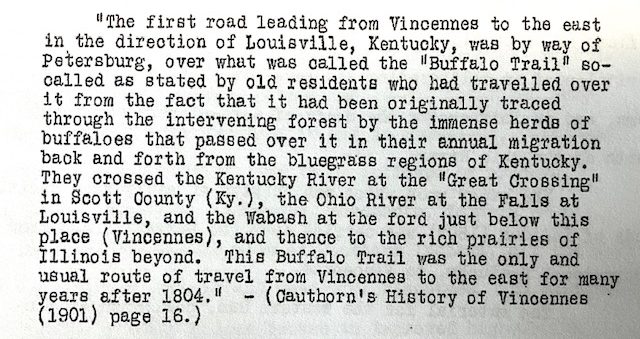
Editor Note: The Kentucky River Crossing was at Frankfort, not Great Crossing.
Courtesy: 1936 Report of the Buffalo Trace Commission (Indiana)
George R. Wilson, Chairman
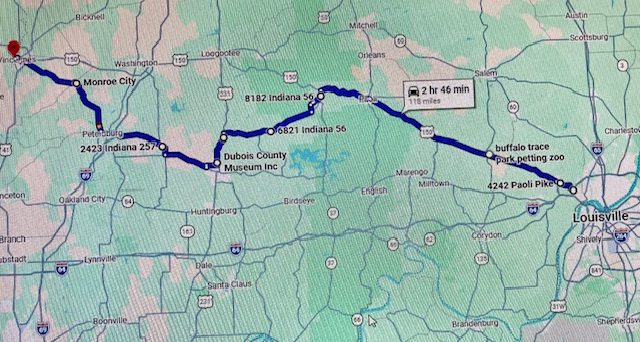
https://maps.app.goo.gl/5RjJyHdtZPmaUAT4A
Courtesy: Google Maps for non-commercial use.
The Lewis and Clark Trust acknowledges the tremendous assistance of Mr. David Drake, Indiana Registered Land Surveyor in determining the Buffalo Trace Corridor.
We urge the use of an active Google Map in following the corridor of the Buffalo Trace. The many turns and use of Indiana County Roads makes navigation challenging and a clear understanding of how Patrick Gass missed the Lewis and Clark party traveling to the Falls of the Ohio as described in Holmberg's, Getting Out the Word. (4) From the Patrick Gass reply to Lyman Draper 1866, there was an uncertainty of the trail. Patrick Gass had traveled back toward Vincennes to meet the Lewis and Clark Party after delivering the “Safe Arrival” messages Lewis wrote to President Jefferson and William Clark’s wrote to Gen. Jonothan Clark in Louisville. As William Clark anticipated, the letter to Jonathan was published in the Palladium, a Frankfort, KY newspaper, on 2 October 1806. Travel time to the Falls was at least 5 days but the trail had few stations or places to stay over-night for shelter, a situation that Governor Harrison corrected in 1809. (5) (6)(7)
The Buffalo Trace
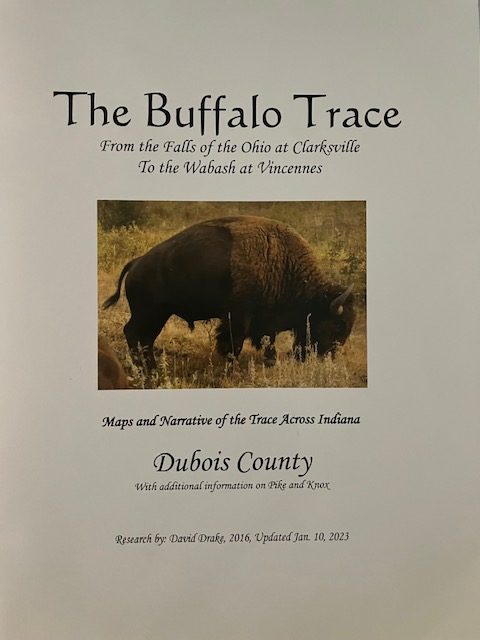
Courtesy: David Drake, 10 January 2023
Published by: The Dubois County Historical Society, 2023
270 Newton Street
Jasper, IN 47546
812-634-7733
Indiana’s Buffalo Trace Trail- Postal History- website, adds to the Lewis and Clark historical significance on the Trace with Charles Floyd carrying mail from Louisville to Vincennes before the joining the Corps of Discovery. The site is an an excellent historical foundation for understanding the Indiana’s Buffalo Trace. (8)
Courtesy: Indiana’s Historical Pathways National Scenic Byways.
The USFS, USDA, Hoosier National Forest describes recreation opportunities on portions of the Buffalo Trace.
A case study funded by USDA Forest Service-Hoosier National Forest based on previous research is an excellent read to learn the history of the Buffalo Trace that includes a historic map.
https://npshistory.com/publications/usfs/region/9/hoosier/buffalo-trace.pdf
A tour of the Indiana Buffalo Trace starting in Vincennes is a foundational experience to understand William Clark’s training by Big Brother General George Rogers Clark. In addition to the French influence in the city on the Wabash River, the NPS George Rogers Clark National Historical Park and Fort Sackville (https://www.nps.gov/gero/index.htm) describes George Rogers Clark tactical capture of the British Fort and the winning of the west during the American Revolution.
George Rogers Clark National Park
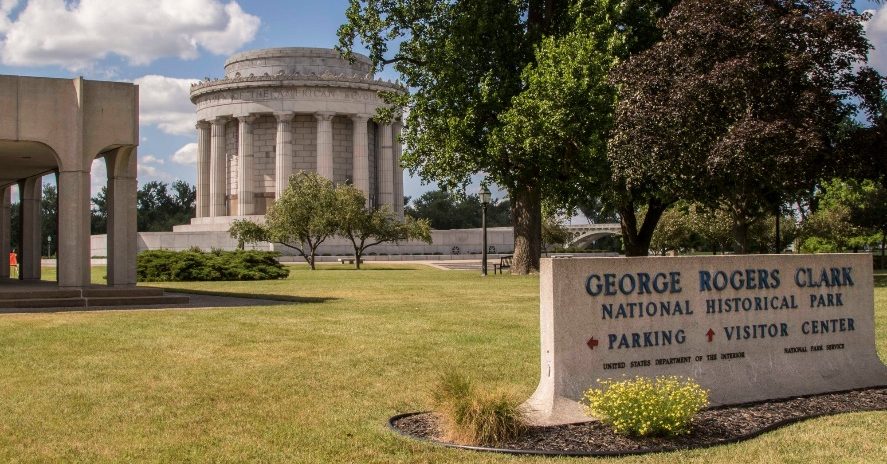
Courtesy: National Park Service
Did the Lewis and Clark party stop at Point of Rocks, see below, and visit with General George Rogers Clark before going to Trouth Springs and Gen. Jonathan Clark?
George Rogers Clark Cabin
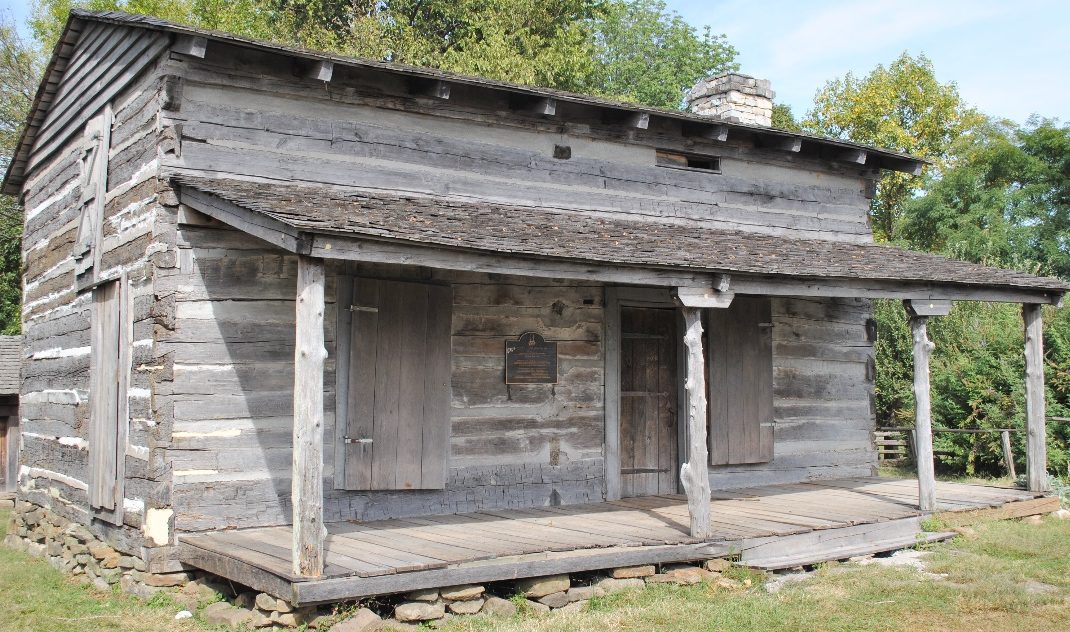
Courtesy: Lewis and Clark Trust
As we depart Indiana’s Buffalo Trace with it’s many twist and turns, the Indiana Marker at 2212 State Street, New Albany, Indiana will be visited again in 1808 by Governor Meriwether Lewis as he travels back to St. Louis. The Indiana Buffalo Trace Story is not over.
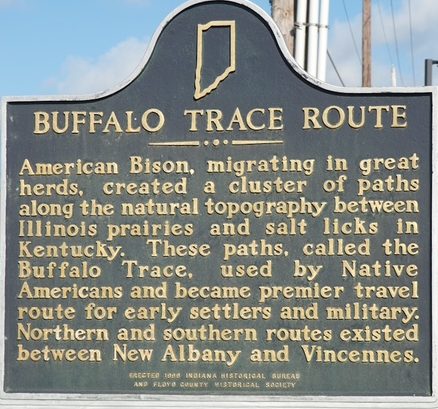
Courtesy: Waymarking.com
On 8 November 1806, the captains, members of the traveling party, including Sheheke his family and the Osage delegation, enjoyed a Clark Family homecoming at Locust Grove, the home of William and Lucy Clark Croghan. The elder statesman and leader, General George Rogers Clark, enjoyed seeing the success of his younger brother as box after box was opened to reveal the expedition collection. (9)(10)
Historic Locust Grove
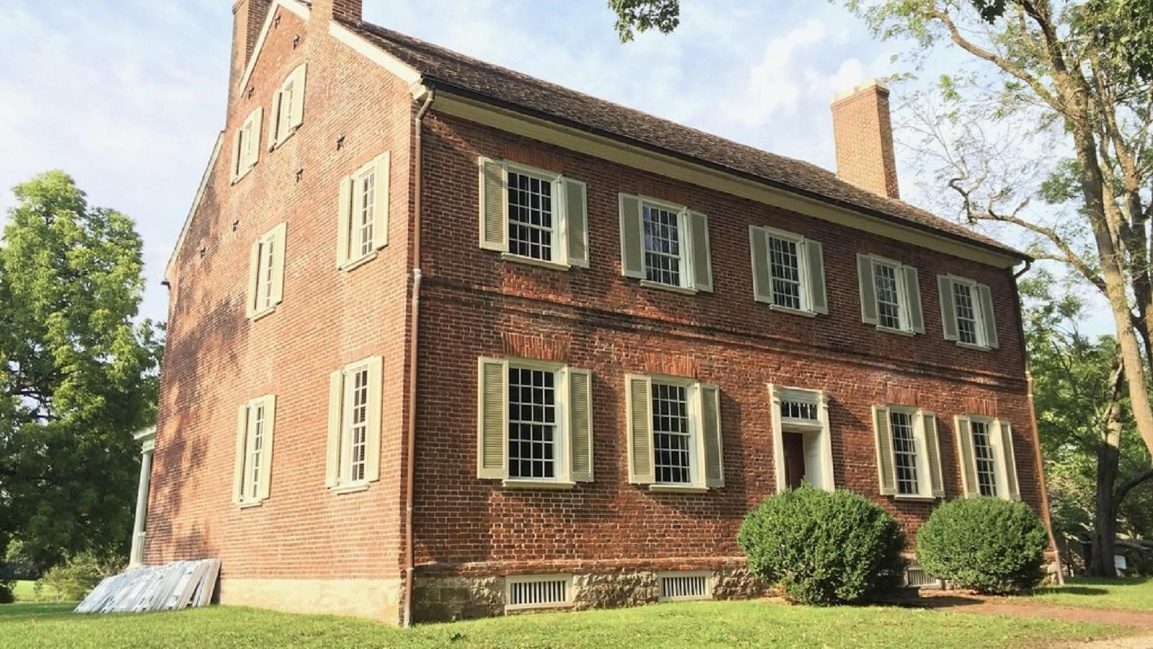
Historic Locust Grove
561 Blankenbaker Lane
Louisville, KY 40207
Courtesy: National Park Service
York's return home was no doubt an occasion for celebration and an opportunity to tell of the wonders of the West that included the Tribal People they met and their respect for his black skin.
York Bronze, with Sculpture Ed Hamilton
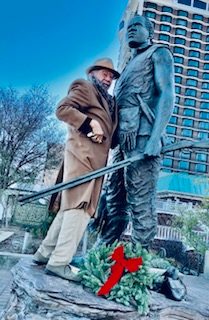
Belvedere, Louisville, KY
Courtesy: Lewis and Clark Trust.
In-addition to festivities, in Louisville, Lewis continued to secure cash to finance the traveling party headed to Washington. On 9 November 1806, he wrote Bill of Exchange #117 in the amount of $400.00, to Thomas Procter, a Louisville merchant. (11)
Source:
(1) Jonathan Clark Day Book, Personal Papers of Jonathan Clark, Filson Historical Society, Louisville, KY.
(2) Jones, Landon, William Clark and the Shaping of the West, Hill and Wang, NY 2004, page 153.
(3) Wilson, George, Early Indian Trails and Surveys, Indiana Historical Society, 1919, page 75.
(4) Holmberg. James, Getting Out The Word, We Proceeded On, Journal of the Lewis and Clark Trail Heritage Foundation, August 2001, page 12-17.
(5) Jacobs, J. G., The Life and Times of Patrick Gass, Cone Wolf Press, Mansfield Center, CT, 2000, page 107-109.
(6) Ibid, page 107.
(7) The Palladiun, 2 October 1806, Frankfort, KY Historical Society.
(8) https://bt.indianashistoricpathways.org/postal-history/
(9) Jones, Landon, William Clark and the Shaping of the West, Hill and Wang, NY, 2004, page 153.
(10) Jacobs, J. G. The Life and Times of Patrick Gass, Lone Wolf Press, Mansfield Center, CT, 2000, page 108.
(11) Jackson, Donald, Letters of the Lawis and Clark Expedition, Second Edition, University of Illinois Press, Urbana, 1978, Vol. l, page 351.