Subject 3 Lewis and Clark Bureaucrat’s

Company Commanders to Federal Bureaucrats and Lewis’ Last Days

5 stops, all on this page

Start at stop 1

From stop 5: Protecting Lewis' Possessions
Jump to a stop 5
  1. 1Company Commanders to Federal Bureaucratic Administrators
  2. 2Governing in a Multi-Faceted Culture
  3. 3Rejected Territorial Expenditures
  4. 4A Celebrated Hero's Tragedy in the Wilderness
  5. 5Protecting Lewis' Possessions

Stop 1 of 5

Company Commanders to Federal Bureaucratic Administrators

Lewis the Governor of the Upper Louisiana Territory

Clark the Brigadier General of the Missouri Militia and Superintendent of Indian Affairs

Planning, exploring and most of the reporting phase Lewis and Clark expedition was over. The realities of governing the complex Upper Louisiana Territory settled-in on the newly appointed Governor Lewis and the Brigadier General Clark. Editing and printing of the Lewis and Clark Journals by Lewis and returning Sheheke and his family to their home at the Mandan Villages by Clark were the primary responsibilities outlined President Jefferson and Secretary of War Dearborn. The fact that the men had little or even no personal time during the last two years and four months seemed to be of little or no concern by the President or Secretary. Like the Exploration, Lewis and Clark engaged in their responsibilities with spirited initiative.

The time between March 1807 and October1809 has been examined by noted Lewis and Clark writers and scholars, even dissecting the time period like the birds and animals examined and described during the expedition. This includes Lewis' courtships with several young women. Writer John Brakeless even suggested that Lewis would not have made a good husband. (1)

In August 1807 Lewis returned to his mother's home in Virginia, following his report to Jefferson and the initial work in Philadelphia to publish the Journals. It is suggested that Lewis traveled to Richmond in September to observe the Burr Treason Trial, unfortunately a written report of his observations has never been found, if one was written. He reviewed land investment for the Lewis family along with plans for their education. A document of more than 10,500 words describing Lewis' Observations and Reflections relating to the American Indian People and the Fur Trade in the Upper Louisiana Territory is attributed in part to this period. The Observations and Reflections document shows that Lewis a was developing a framework for governing the Upper Louisiana Territory and establishing a solid economic foundation. (2)

Clark was back in St. Louis in April 1807, with Sheheke, his wife, Yellow Corn and son, White Painted House, plus the funds and Land Warrants awarded by Congress to make final payment to the Expedition Members. Failure of the first attempt to return Sheheke to his home only added to the diplomatic concerns for the Jefferson Administration and increased the burden on Lewis and Clark. (3) (4)

Late 1807 or early 1808, Lewis departed Ivy, Virginia for St. Louis via the Great Valley Road, the Boone Trace and Wilderness Road. His traveling companions were John Pernier, his free mulatto servant, and Reuben Lewis, his younger brother. While it is not certain, Captain Tom, Reuben’s slave may have been in the west bound traveling party. The Old Kentucky Road from Bean Station, TN and over Clinch Mountain had been improved to accommodate wheeled vehicles like the carriage Lewis was taking to St. Louis. There are two sources confirming that Lewis owned a carriage and traveled, in part, to St. Louis in a carriage. Unfortunately, we find no detailed description of the carriage. Road conditions of the era would tell us that it was a substantial vehicle, not a light weight carriage. (5)

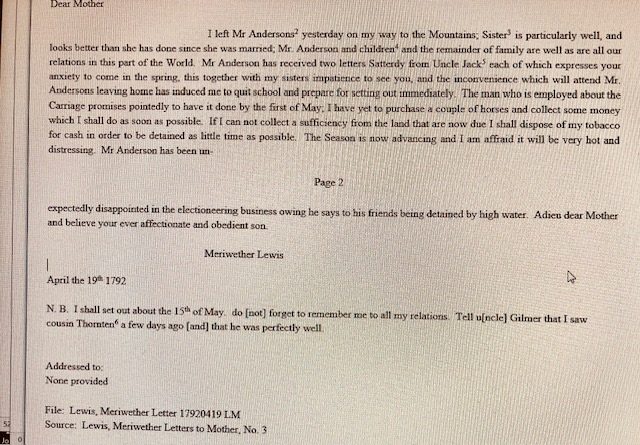
Meriwether Lewis Letter, University of Virginia Special Collections, # 17920419LM
Meriwether Lewis Letter, University of Virginia Special Collections, # 17920419LM

Transcription courtesy: Douglas Valentine

From the above letter, dated 19 April 1792, at Roundabout (VA), we know that Meriwether Lewis had a carriage built and traveled to Georgia to transport his mother back to Locust Hill, Ivy, VA. Lewis family oral tradition believes the carriage was built at Monticello.

The route through Bean Station was slightly longer but crossed fewer mountains and streams. Following the historic trail through Cumberland Gap, the foursome followed the Boone Trace and Wilderness Road to Lexington, KY.

Lewis was honored at a public dinner at Mr. Wilsons Inn, present-day Phoenix Park (N. Limestone and E. Main Street) Lexington, KY. (6) Lewis and his party traveled to Louisville and like other travelers in that era, traveled by boat to St. Louis. Reuben Lewis took the carriage over the old French Military Road from Lusk Ferry, present-day Golconda, IL, arriving in St. Louis on 26 February 1808, while Lewis took the more solitary route across the Indiana Territory to St. Louis along the Buffalo Trace.

Historical document

“Kentucky Gazette & General Advertiser” Vol. XXI - # 1164

Tuesday February 6, 1808, page 3

Source: University of Kentucky W. T. Young Library, Reel # S-8, # 16

Transcribed

On Wednesday, the 20th instant (January), a PUBLIC DINNER was given by the citizens of Lexington, at Mr. Wilson’s Inn, to his Excellency MERIWETHER LEWIS, Governor of Upper Louisiana: who passed on to his government.

The repast was elegant, and numerously attended. Every countenance indicated; it was paying a pleasing tribute to merit.

After dinner toast:

  1. The United States- To continue free is only to will it.
  2. Union- The rock on which stands the Temple of Liberty ---may those who seek to undermine it, be immolated on its alter.
  3. The Constitution- The shield of Innocence---not the sanctuary of Guilt.
  4. The Oceans---Free as the air we breathe---the nation who arrogates dominion over it, should be treated as a Pirate.
  5. The Embargo---Its operate will prove the wisdom in which it originated. -5 cheers.
  6. National Dignity---preferable to the merchandise of Europe—or the world. —6 cheers.
  7. Home manufacturers---They will ultimately afford us an indemnity for losses of war.
  8. Thomas Jefferson---Great whilst out of office---great whilst in --- and great in motives which urge him to retire. 9 Cheers.
  9. The majority in Congress---Their vote for the Embargo evidenced, that they are not to be caught in the net of diplomacy. ---6 cheers.
  10. Commerce---a National Blessing when not too dearly bought.
  11. Peace with Honor---Wars rather than Disgrace. 9 cheers.
  12. Agriculture---the basis of our Independence. ---6 cheers.
  13. The Patriots of ’76. ---Liberty is the price of their blood: we will not surrender it but with ours. ---9 cheers.
  14. Prior (Pryor) and his party on the Missouri. ---Their Valor entitles them to the thanks of their country. --- 3 cheers.
  15. The British Nation. ---They, as well as their King, seems to have something yet to learn.
  16. The memory of the illustrious Washington. 9 cheers.
  17. Aaron Burr. ---May he pay his debts to his country and his creditors. ---3 hisses.
  18. After Governor Lewis retired, ---was drank, The Governor of Upper Louisiana. ---the intrepid soldier --- the adventurous traveler --- and the honest man. ---6 cheers.

VOLUNTEERS.

  1. General William Clark --- the friend and companion of Governor Lewis in the arduous enterprise to the Pacific Ocean. --- 6 cheers.
  2. James Madison. --- The firm Patriot --- the wise Statesman, --- may he be the successor in office of Mr. Jefferson. ---6 cheers.
  3. General Charles Scott, --- The soldier of ’76. --- he deserves well of the country. ---6 cheers.

Source:

(1) Bakeless, John, Lewis and Clark: Partners in Discovery, Dover Publications, Inc. NY, 1947, page 385.

(2) Ambrose, Stephen, Undaunted Courage: Meriwether Lewis, Thomas Jefferson, and the Opening of the West, Simon & Schuster, NY, 1996, page 431 & 434.

(3) Jones, Landon, William Clark and Shaping of the West, Hill and Wang, NY, 2004, page,161.

(4) Ambrose, Stephen, Undaunted Courage: Meriwether Lewis, Thomas Jefferson and the Opening of the American West, Simon & Schuster, NY, 1996, page 441.

(5) Marshall, Thomas, The Life and Papers of Frederick Bates, Washington University and Missouri Historical Society1926, V-1, Page 304 (St. Louis 26 Feb. 1808) and Lewis Family letters reveal that Lewis owned a carriage.

(6) KY Gazette & General Advertiser, Vol. XXI, # 1164, February 6, 1808, page 3, UK Young Library, Reel S-8, # 16.
Stop 2 of 5

Governing in a Multi-Faceted Culture

French, Spanish and United States Governments in St. Louis 1763-1804

In 1808 cultural changes were sweeping the country and St. Louis and it's several cultures were part of the changing fabric of the young United States. The Spanish style of governing was still strong in the minds of the former French and Spanish citizens. General Wilkinson's self-serving influence and Aaron Burr's seditious followers had their own agenda. United States policy and the cultural differences with the American Indian Nations added a destabilizing factor, made even more difficult by the British efforts to influence the Tribal People. Lewis and Clark had inherited few effective agents to work for the new American government in the territory. Frederick Bates, Territorial Secretary, clearly had a personal philosophy for governing the territory and it certainly did not agree with President Jefferson or Governor Lewis. Bates. was more trouble than value to the territorial government. (1)(2)

During the expedition Lewis and Clark were truly military commanders without bureaucrats second guessing every decision and expenditure. Now people 1000 miles to the East required written communications which slowed territorial governance. At the very best, it required a month of travel time to send documents or letters to Washington and an equal time to secure a response. The winter weather could require months to complete communication between Washington, D.C. and St. Louis. In addition to the travel time, security of the mail was doubtful. A detailed list of letters, related documents, and the travel time by several prominent people in St. Louis, including Lewis and Clark, are listed in Uncovering the Truth about Meriwether Lewis, by Thomas Danisi, Chapter 9 - "Was Governor Lewis' Correspondence Intentionally Delayed".

Public dissemination of laws and policy was by word of mouth or announcements posted as a broadside on a public bulletin board until Joseph Charless established the Missouri Gazette in 1808. The Gazette and printing business received financial support from both Lewis and Clark. (3) Even with the challenges, a great deal was accomplished between Clark’s return in April 1807 - Lewis' return on 8 March 1808 and their departure for Washington in September 1809. The partial list Includes:

  • Improved strength of Fort Bellevue, later Ft. Madison, near Iowa - Missouri border. (1)
  • Packaged and shipped the 1807 Big Bone Lick bones to Thomas Jefferson. (2)
  • Assisted in establishing the Missouri Gazette by editor Joseph Charless. (3)
  • Clark crossed Missouri again, guided by Nathan Boone, son of Danie Boone, to build Ft. Osage, east of present-day Kansas City. (4)
  • Negotiated a Treaty with the Osage Indians. (5)
  • Lewis wrote and published the Territorial Laws. (6)
  • Completed work on the Observations and Reflections relating to the Indians and Fur Trade for Secretary Dearborn. (7)
  • Organized the St. Louis Missouri Fur Company. (8)
  • The eventual successfully return of Sheheke and his family to their home on the upper Missouri River with the contractual aid of the newly formed St. Louis Missouri Fur Company. (9)
  • Appointed Daniel Boone to serve as a Justice of the Peace for the Femme Osage District and supported the building of a shot tower at Herculaneum, MO. (10)
  • Authorize the building of roads or their improvement. (11)
  • Directed Agent Boilvin to arrest four Indians involved in a murder of settlers. (12)
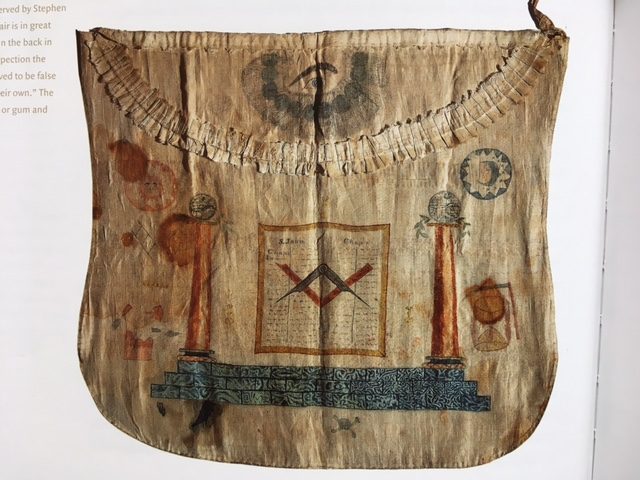
  • Official Social Duties, personal finance affairs and helped organize Masonic Lodge #111. (13)
  • Clark was absent from St. Louis for 12 months in 1807-08 for the historically significant dig and report from Big Bone Lick, KY for President Jefferson and his marriage and honey moon. Clark's return trip to St. Louis included transporting blacksmith tools and a grain mill for American Indian benefit. (14)

The above list is a very considerable body of work in only 28 months for two young government appointed administrators. Their experience in making decisions without the "shadow" of bureaucrats in Washington during the during the expedition is clearly reflected in their success is governing in the Upper Louisiana Territory while individuals like Secretary Bates and John Smith T worked to “undermine” Governor Lewis. Land Board decisions and John Smith T’s efforts to separate the lead mine region from the territory made governance extremely problematic. (15)

Unfortunately, Lewis had not written a single word for the editor of the Expedition Journals. The pressure had built to a crescendo when Bills of Exchange written by both Lewis and Clark are questioned and rejected by the new Madison Administration. The only solution was a trip to Washington to defend their action.

Shot Tower Herculaneum Missouri

Shot Tower Herculaneum Missouri (picture 1 of 2)
Shot Tower Herculaneum Missouri (picture 2 of 2)

Herculaneum-Where Shot Making was and Industry, Oscar E. Berninghaus, 1920

Courtesy: Missouri State Capitol and City of Herculaneum

Meriwether Lewis Masonic Apron

Meriwether Lewis Masonic Apron

Courtesy: Grand Lodge of Montana, Helena, MT

Source:

(1) Jones, Landon, William Clark and the Shaping of the West, Hill & Wang, NY, 2004, page 173-174.

(2) Ibid, page 163.

(3) Holmberg, James, Dear Brother: Letters from William Clark to Jonathan Clark, Yale University Press, New Haven, 2002, page 136-note 15.

(4) Greg, Kate, (Editor), Westward With Dragoons: The Journal of William Clark, The Ovid Bell Press, Fulton, MO, 1937, page 15 -16.

(5) Ambrose, Stephen, Undaunted Courage: Meriwether Lewis, Thomas Jefferson, and the Opening of the West, Simon & Schuster, NY, 1996, page 447.

(6) Danisi, Thomas & Jackson, John, Meriwether Lewis, Prometheus Books, NY, 2009, page 12.

(7) Ambrose, Stephen, Undaunted Courage: Meriwether Lewis, Thomas Jefferson, and the Opening of the West, Simon & Schuster, NY, 1996, page 431.

(8) Ibid, page 444.

(9) Jones, Landon, William Clark and the Shaping of the West, Hill and Wang, NY, 2004, page 172.

(10) Ambrose, Stephen, Undaunted Courage: Meriwether Lewis, Thomas Jefferson, and the Opening of the West, Simon & Schuster, NY, 1996, page 446.

(11) Ibid, page 447.

(12) Ibid, page 441

(13) Ibid, page 443.

(14) Jones, Landon, William Clark and the Shaping of the West, Hill & Wang, NY, 2004, page 160 & 161.

(15) Turnbow, Tony, Jefferson’s Spy: The Secret Life of Meriwether Lewis, Vol 1, 2026, page 107-108

Stop 3 of 5

Rejected Territorial Expenditures

Lewis and Clark to Washington

Rejected Bills of Exchange (A written order binding one party to pay a fixed sum of money to another party, on demand) written for U. S. Government expenses left the financial responsibility for payment on Lewis or Clark. The Bills of Exchange were for amounts as small as $18.75 for English to Spanish translation of the Territorial Laws to $1575.95 for printing of the Territorial Laws. War Department accountant, William Simmons was controlling the Federal "purse" with a tight fist beyond reason, a fact Lewis had already experienced while settling expedition expense. Simmons was a War Department Accountant and had become an impediment to the effective operation of his office. (1) The lack of or even reduction in Federal funds flowing into St. Louis would leave the territorial financial “house of cards” in a very precarious situation. (2)(3)

After developing a coordinated strategy to settle their disputed Bills of Exchange, Lewis and Clark left St. Louis heading east by separate routes and at slightly different times. Lewis left by boat on 4 September 1809, with the intention of traveling to New Orleans, sailing to Baltimore then overland travel to Washington, DC. However, as he floated down the hot and humid Mississippi River, he had time to rethink his plans and started changing his mind. At the same time, he felt his old nemesis ague returning - malaria (ague) was caused by parasites transmitted through mosquitoes. Equally disturbing, there were reports from boats going up river of "the fever" further down river. Additionally, the increased hostilities with the British impressing American sailors and concerns for his documents, including the unpublished expedition journals, made Lewis change his travel plans.

During the trip, Lewis paused to update his will, witnessed by Francois Trenchard, a prominent land owner between Lake Gayoso and the Mississippi River, and Lewis' Servant, John Pernier. Writing a will or designating a Power-of-Attorney before a long and dangerous trip was not unusual in that day. The boat crew’s concern for Lewis’ health and safety became great. They advised Captain Gilbert Russell, Fort Pickering Commander, that Lewis had twice tried to get out of the boat and jump into the water. Both situations play into future evaluations of Lewis' state of health. Medical professionals today confirm that a malarial attack brings on a confused state of mind and high temperature. There is no wonder that Lewis tried to cool-off in the river water. (4) Lewis' health was similar-to countless individuals in the Ohio and Mississippi River Valley in the early 1800's. Hundreds of settlers in the region were carriers of the malarial parasite Plasmodium, even Thomas Jefferson, who never visited the Ohio River valley, experienced the ague. (5)

When Lewis arrives at Ft. Pickering the fort was not new to him. The fort was the fifth built on the bluffs, all on the future site of Memphis, TN., Ft. Assumption, built by the French, San Fernando by the Spanish, and Ft. Adams, the third fort was an American fort. Ft. Adams, the third fort was renamed Ft. Pickering for the Secretary of State Timothy Pickering and eventually moved three miles south to a location near the American Indian Mound. The location provided a better view of the river. (6)(7) In January 1798, Secretary of War James McHenry, directed that Capt. John Pierce be sent to command Ft. Pickering along with what he called "a select corps of incomparable rascals under Lewis, Marschaulk and Steele". When Pierce died from the "fever" Lewis assumed command. (8)

Also in 1798, a friend and former commander of Lewis, William Clark, now a civilian, took a boat load of products down the Mississippi River to sell in New Orleans. Clark drew maps of the Mississippi River that included Ft. Adams, the future Ft. Pickering. It is not a stretch of the imagination to believe William Clark visited with Lewis at the fort, though we find no verifying source.

In August 1798, Col. John F. Hamtramck, leading an advanced party of Gen. James Wilkinson's Army, reached Ft. Adams and directed Lewis to prepare to move the fort to the elevated site near the Indian Mound. (Today the mound is in Chickasaw Heritage Park (Chikasaha Heritage Park). The mound is described as a Woodland and Mississippian culture mound dating 400-700 AD and 1000-1500 AD and believed to be used as a pre-contact ceremonial center. The location allowed a north and south view of the Mississippi River. Today the park is entered from Riverside Boulevard and Ornamental Metal Museum Drive. (9)(10)

The fort where Lewis would arrive 15 September 1809, ill and in need of medical assistance, was the not new to him.

The Governor's illness was very concerning to Captain Russell. Lewis was placed in Russell's private quarters where he could be observed. Excessive use of alcohol and opium used for treatment of the malaria attack had placed a severe strain on Lewis' health. (11)

On 18 September, Militia Major James Neeley, U. S. Agent to the Chickasaw Indians, arrived at Ft. Pickering. Major Neeley had been appointed to the position on 9 August 1809, after the position had been vacant for a year. (12) The exact reason Major Neeley traveled to the fort is uncertain; however, his responsibilities would include transporting treaty annuities and other supplies to the agency headquarters at Houlka. White people, "squatters", intruding on Chickasaw lands and their removal would be a joint responsibility for the Major

and Captain.

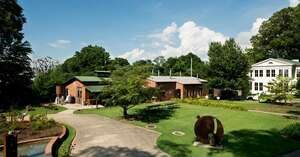
Site of Ft. Pickering, present day, Metal Museum, 314 Metal Museum Drive, Memphis, TN

Site of Ft. Pickering, present day, Metal Museum, 314 Metal Museum Drive, Memphis, TN

Courtesy: Lewis and Clark Trust

Neeley’s arrival provided an opportunity for a larger party to travel east with greater security. After securing cash and credit for two horses for the journey, Lewis, his servant John Pernier, Major Neeley, and “Captain Tom”, Reuben Lewis' Negro servant, left Ft. Pickering for the Chickasaw Agency on 29 September. (13) While their route of travel was not defined, the logical route of their travel was along the Indian Trail listed as Trail 105 or 119 in Indian Trails of the Southeast by William E. Meyer. (14)(15) Today, US 78 and I-22 is the corridor of travel through the region. Additionally, either trail would balance with a historical accepted rate of 20 miles per day on horseback, when traveling with other horses in a "pack-train". Lewis' weakened condition from the illness and treatment made the 20 miles per day a real strain on his body and mind. [Raw numbers based on today's roads: the 127 miles from Memphis, TN to Old Houlka, MS divided by 6 days of travel time -29 September through 4 October- equals 21.2 miles per day.] The party would have passed in the vicinity of Holly Springs, MS and Chuahla Shintok (Mound) GPS 34.73278 -89.333972 and the lngomar Shintok (Mound) GPS 34.39641, - 89.051971. The lngomar Mound is approximately 10 miles south of New Albany, MS and near today's Tanglefoot Trail. Lesser-known Tribal sites are logical over-night stops where food, water and shelter could be found. (16)

Editorial Note: This is a good place to suggest that seven places in Northern Mississippi are helpful in understanding the relationship of Meriwether Lewis the cultural and geography of Northern Mississippi.

These sites vividly interpret the culture and history:

Natchez Trace Parkway Visitor Center 2680 Natchez Trace Parkway

Tupelo, MS 38804

662-680-4027

Union County Heritage Museum 114 Cleveland Street

New Albany, MS 386S2 662-538-0014

Pontotoc Town Square Museum and Post Office 59 South Main Street

Pontotoc, MS 38836

800-275-8777

Chickasaw Heritage Center Chickasaw lNKANA Foundation opening in 2027 https://inkana.org/

Holly Springs National Forest: https://www.fs.usda.gov/r08/mississippi/recreation/holly-springs

Chickasaw Game Management Area https://mapcarta.com/21188582/Map

Mississippi Hills Heritage Area https://mississippihiIls.org/history-culture/

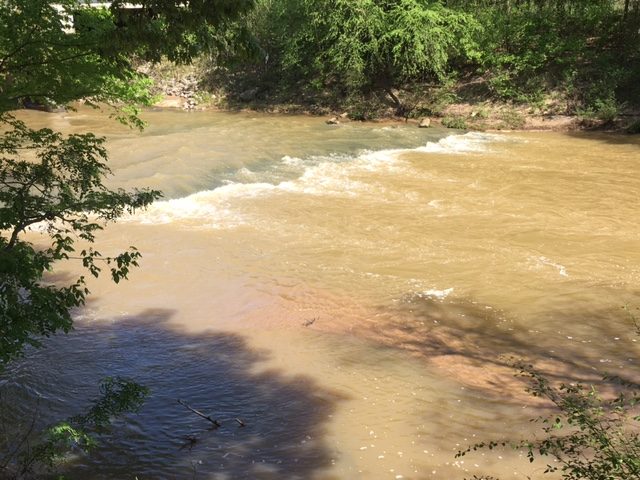
Ford across Tallahatchie River (34°29’03.62”N 89°01’12.51”W) New Albany, Union County, MS The ford is in the New Albany Sports Plex. The Tallahatchie Trail runs along the river.

Text below for Historical Marker near the ford.; Final Journey of Meriwether Lewis

Text below for Historical Marker near the ford.

Final Journey of Meriwether Lewis

Explorer Meriwether Lewis traveled through this area in 1809 en route to Washington, D C, on what would become his final journey. Departing St. Louis on September 4, Lewis arrived at Fort Pickering (now Memphis, Tennessee) and then moved overland into the Chickasaw Nation. He crossed the Tallahatchie River near here on his way to the Chickasaw Agency, which was located near the Natchez Trace in Pontotoc County. Lewis died from a gunshot wound at Grinder’s Stand in Tennessee on October 11, 1809.

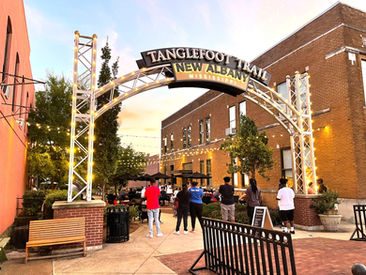
The Tanglefoot Trail, a 43.5-mile Rails-to-Trails corridor between New Albany and Houston, MS, is part of the Col. William Clark Falkner Railroad System. The paved trail follows the historic trail used by Lewis in 1809 as he traveled to the Chickasaw Agency.

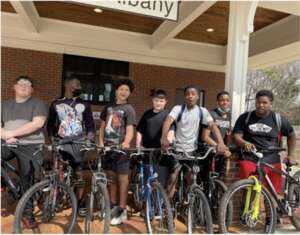
https://tanglefoottrail.com/; Ride, Run, Walk the Tanglefoot Trail (picture 1 of 3)
https://tanglefoottrail.com/; Ride, Run, Walk the Tanglefoot Trail (picture 2 of 3)
https://tanglefoottrail.com/; Ride, Run, Walk the Tanglefoot Trail (picture 3 of 3)

https://tanglefoottrail.com/

Ride, Run, Walk the Tanglefoot Trail

Courtesy: Tanglefoot Trail

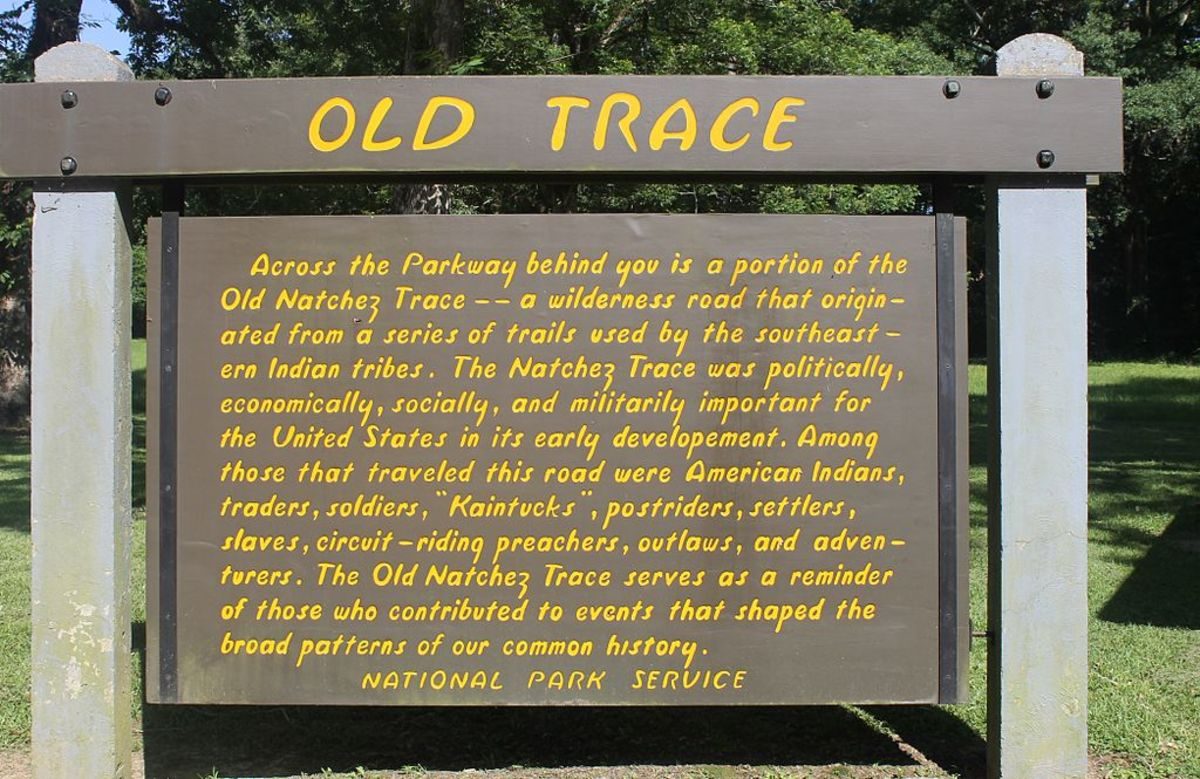
Lewis, Neeley and party arrived at the Chickasaw Agency, Old Houlka, MS on 4 October 1809. In 1801, Agent, Samuel Mitchell had stated building the headquarters and center of commerce for the benefit of the Chickasaw People. The main house was 30 feet long with nine-foot-deep porches along the entire length of the front and rear with a central chimney having back-to back fire places, built in a style known as a "saddlebag". Additionally, there was a corn house, potato house, meat house, loom house, kitchen. and wheelwright/carpenter shop. After hiring a blacksmith in 1807, a blacksmith shop was built. The location was on the Pontotoc Ridge, near the Natchez Trace. (17) In-addition to serving the Chickasaw People the location provided services and accommodations for boatmen traveling north, the so-called "Kaintucks".

Old Trace Sign

Courtesy: NPS-Natchez Trace Parkway

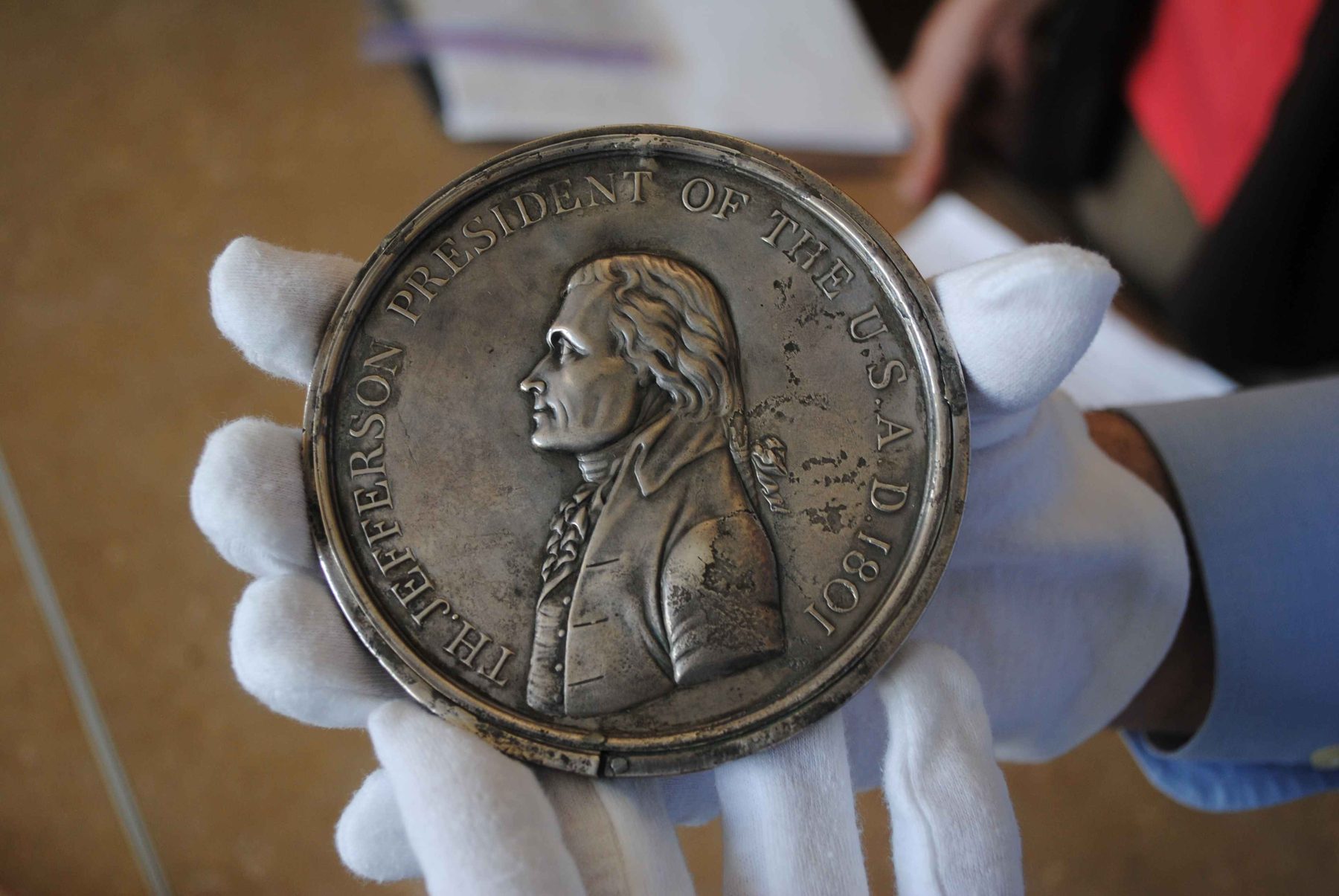
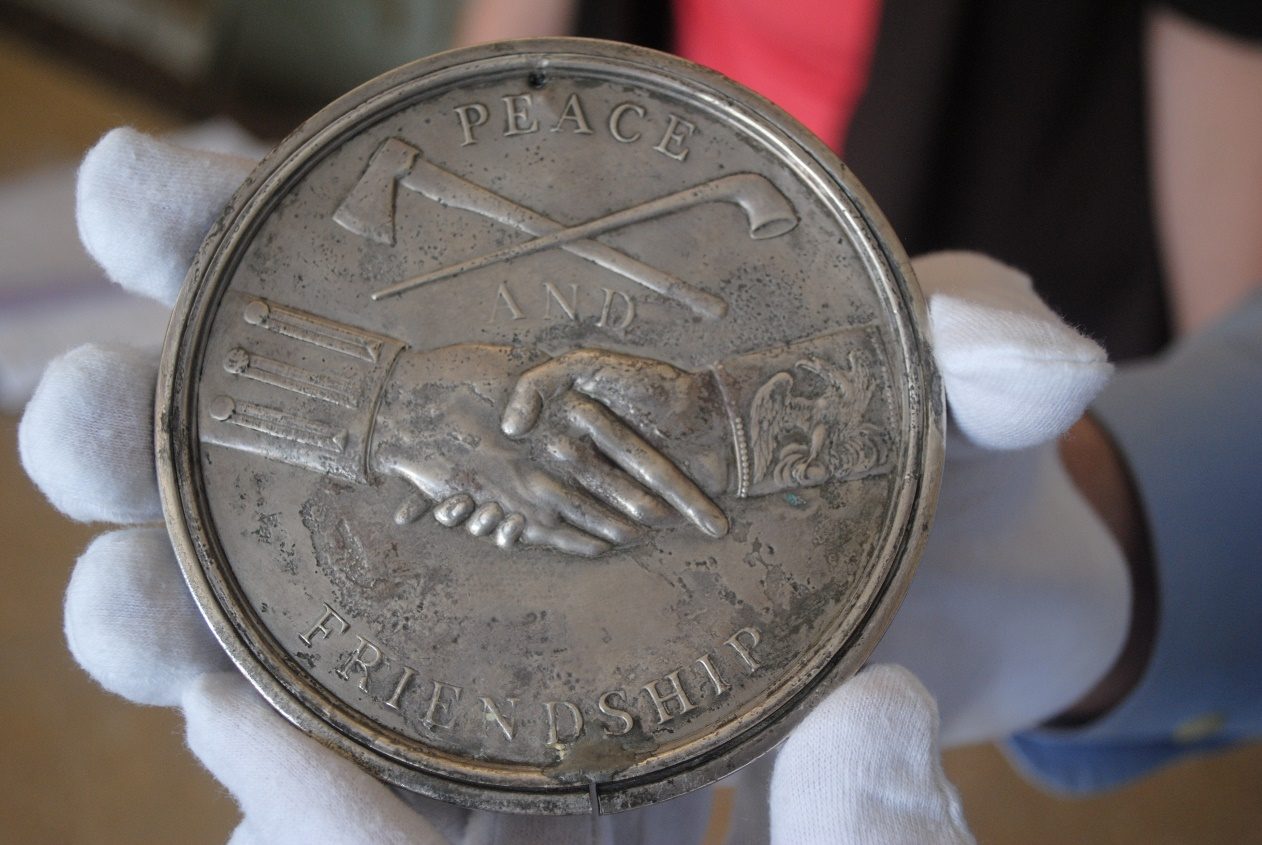
If Lewis told the Chickasaw Leaders about the Lewis and Clark Expedition, they would have recognized the Clark name. The Colbert brothers were successful leaders of the Chickasaw People and had led the attack on Ft. Jefferson built by George Rogers Clark in 1780 near the confluence of the Ohio and Mississippi Rivers. Lt. William Clark, as General Anthony Wayne’s diplomat to the Chickasaw People, delivering gifts of muskets, powder, lead, corn, salt, and whiskey to secure their alliance with the United States against the Indians in the Ohio Country. (18) William was successful in the mission and returned to Wayne’s headquarters with Chickasaw Chief Underwood and seven (7) Warriors, “who appear determined and anxious for action”, Wayne reported to Secretary of War Knox. (19) The Chickasaw relationship was further strengthened in 1801 at the Treaty of Chickasaw Bluffs when Chief George Colbert was presented a Silver Jefferson Peace Medal. (20)(21)

Jefferson Peace Medal (22)

Jefferson Silver Peace Medal, 4-inch, presented to Chickasaw Chief George Colbert at the 1801 Chickasaw Bluff Treaty Signing.; 867 Charles F (picture 1 of 2)
Jefferson Silver Peace Medal, 4-inch, presented to Chickasaw Chief George Colbert at the 1801 Chickasaw Bluff Treaty Signing.; 867 Charles F (picture 2 of 2)

Jefferson Silver Peace Medal, 4-inch, presented to Chickasaw Chief George Colbert at the 1801 Chickasaw Bluff Treaty Signing.

Courtesy: Chickasaw Holisso Research Center

867 Charles F. Cooper Memorial Center

Sulphur, OK 73086

After resting at the agency for two (2) days the party set out again on 6 October following the U. S, designated Natchez Trace, the more historic Chickasaw Trace. The party passed near the Pharr Mounds (Natchez Trace Parkway Mile marker 286.7) North of Tupelo (23) and crossed the Tennessee River on the morning of 9 October, where Chickasaw Chief George Colbert operated a Stand and Ferry. (24) That evening the party camped near present-day Collinwood, TN (Natchez Trace Parkway Mile Marker 355). The next morning two (2) horses had strayed and Neeley searched for the horses while Lewis promised to wait at the first house along the Trace inhabited by white people. (24)

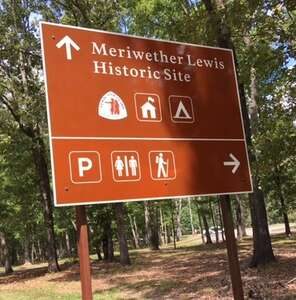
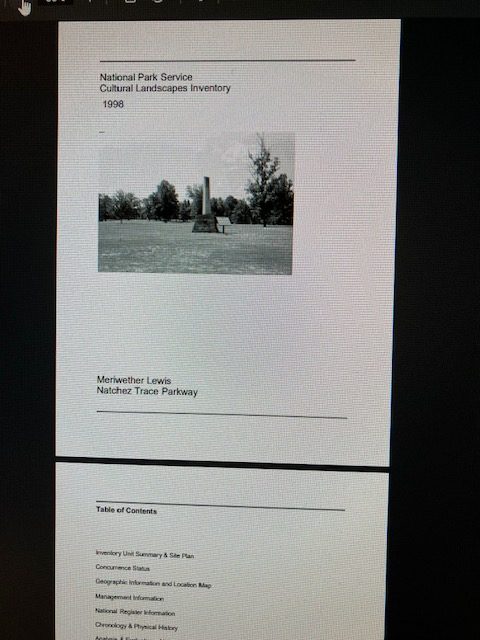
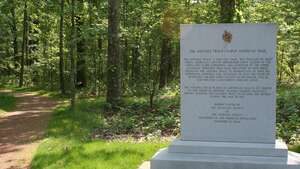
Unfortunately, we have no record of Meriwether Lewis describing his impression of the parklike region or culturally rich area which he was traveling though. Fortunately, we have the National Park Service- Cultural Landscape Inventory 1998, Meriwether Lewis – Natchez Trace Parkway. From the early effort to protect Lewis’ grave, successive Tennessee and Federal Agencies have protected the Meriwether Lewis Grave Site. The Cultural Landscape Inventory for the Lewis Grave is an excellent demonstration of historic preservation. The pictures in the report present a clear description of the site and stately beauty of a park like setting over the past 100 years or more. Lewis’ death is a heartbreaking end to a brilliant and accomplished young life. The beautiful and respectful park is a memorial to a successful public servant. Meriwether Lewis should be honored for his accomplishments, including his leadership during the first recorded exploration of the American West, instead of the societal cloud that hangs over Meriwether Lewis’ mysterious death.

Meriwether Lewis Site, Natchez Trace Parkway

Meriwether Lewis Site, Natchez Trace Parkway

Courtesy: Lewis and Clark Trust

https://npshistory.com/publications/natr/cli-meriwether-lewis.pdf

https://npshistory.com/publications/natr/cli-meriwether-lewis.pdf

The National Park Service Report clearly shows with pictures, dating 1905 forward, along with a narrative detailing the care of local, state, and federal agency care for the final resting place for Governor Meriwether Lewis.

Archaeologically documented, the area of Northern Mississippi, Northwestern Alabama and Western Tennessee had supported human habitation since 6000 BC. The Chickasaw People, a European pronunciation of “Chickasah”, are recorded contacting with DeSota in 1540 and again with LaSalle in 1682. Significant trade with the Chickasaw and Choctaw People, began in 1698 when they were visited by the Thomas Welch trading party. (25)

Source:

(1) Danisi·Thomas & Jackson, John, Meriwether Lewis, Prometheus Books, Amherst, NY, 2009, page 271.

(2) Ibid, page 247.

(3) Jones, Landon, William Clark and the Shaping of the West, Hill and Wang, New York, 2004, page 175.

(4) Chuinard, E. G, M.D. Only One Man Died: The Medical Aspects of the Lewis and Clark Expedition, Ye Galleon Press, Fairfield, Washington, 1999, page 176,

(5) Peck, David, O, D., Or Perish in the Attempt, Far Country Press, Helena, MT, 2002, page 295.

(6) Cramer, Zadok, The Navigator.:.,,,,,.., 8th Edition, Pittsburgh, 1814, page 187,

(7) Weeks, Charles A., Paths to a Middle Ground: The Diplomacy of Natchez, Boukfouka, and San Ferando de las Barrancas, 1791- 1795, University of Alabama Press, 2010, Page 51.

(8) Roper, James E., Fort Adams and Fort Pickering, West Tennessee Historical Society, 1970, Vol. 24, page 13.

(9) https://www.chickasaw.net/getattachment/Our-Nation/Heritage/Mounds-of-the-Chickasaw-Homelands/CN- Mound-Project_2021_Apr29.pdf.aspx?lang=en-US pages 25-29.

(10) Peck, David, 0. D., Or Perish in the Attempt, Far Country Press, Helena, MT, 2002, page 291.

(11) Atkinson, James R., Splendid Land Splendid People, The University of Alabama Press, Tuscaloosa, 2004, page 198,

(12) Ambrose, Stephen E., Undaunted Courage: Meriwether Lewis, Thomas Jefferson and the opening the American West, Simon & Schuster, NY, 1996, page, 462,

(13) Meyer, William E., Indian Trails of the Southeast: Forty-second annual report of the Bureau of American Ethnology, Facsimile Reprint, Gustavs Library, 2009, page 816 & 819.

(14) https://www.chickasaw.net/Our-Nation/Heritage/Mounds-of-the-Chickasaw­ Homelands.aspx, page 21-23, page 39-43,

(15) Atkinson, James R., Splendid Land Splendid People, The University of Alabama Press, Tuscaloosa, 2004, page 184.

(16) Bodley, Temple, George Rogers Clark: His Life and Public Service, Houghton Mifflin Co., Cambridge, 1926, page 170.

(17) Atkins. James R, Splendid Land Splendid People, The University of Alabama Press,Tuscaloosa, 2004, page 184

(18) Buckley, Jay H., William Clark Indian Diplomat, University of Oklahoma Press, 2008, page 37.

(19) Knopf, Richard, Wayne's Western Campaign: The Wayne-Knox Correspondence, 1793-1794, The Pennsylvania Magazine of History and Biography, Vol.78, # 3 (July 1954), page 298-341.

(20) Clements, Paul, Chronicles of the Cumberland Settlements 1779-1796, The Foundation of William and Jennifer Frist, Self-published, 2012, page 405.

(21) The Oklahoman, Oklahoma City, (News Paper) Jan, 16, 1995.

(22) https://www.oklahoman.com/story/news/1995/01/16/indian-peace-medal-given-to-chickasaws/62402913007/

(23) https://www.nps.gov/natr/index.htm

(24) https://www.nps.gov/places/colbert-ferry-stand-site.htm.

(25) Atkinson, James, R., Splendid Land Splendid People: The Chickasaw Indians to Removal, The University of Alabama Press, Tuscaloosa, 2004, pages 1-25.

Stop 4 of 5

A Celebrated Hero's Tragedy in the Wilderness

"I fear o! I fear"

Hundreds of hours of research and scholarly writing has been devoted to the last days of Meriwether Lewis. Ambrose, Bakeless, Danisi, Fisher, Phelps, Guice, Jenkinson, Jones, Holmberg (1) and many other fine writers have analyzed and described the time between Lewis' arrival at Ft. Pickering and Grinders Stand. Each writer is worthy of reading to see their point of view. Autumn fogs are common in the Ohio and Mississippi River Valley, like the fog of mystery that hangs over Meriwether Lewis' death. By His Own Hand: The Mysterious Death of Meriwether Lewis, edited by John D. W. Guice with contributions by James J. Holmberg, John D. W. Guice, and Jay H. Buckley with an Introduction by Clay S. Jenkinson and a very thoughtful Forward by Elliott West, details the facts of Lewis' death in 178 pages. The book provides the several descriptions of Lewis' mysterious death for a nation that loves mystery and intrigue. (2) In James Neelly's letter to Thomas Jefferson dated 18 October 1809, Neelly described the situation he found, "……I came up some time after, & had him (Lewis) as decently Buried as I could in that place - if there is anything wished by his friends to be done to his grave I will attend to their Instructions”. (3)

During Meriwether Lewis’ visit to Philadelphia in 1807, arranging for publication of the expedition journals, he made friends with ornithologist Alexander Wilson who agreed to illustrate the expedition birds. In May 1811, Wilson traveled the Natchez Trace and stopped at the Grinders where he interviewed and recorded Mrs. Ginder’s statement of Lewis’ death. In the closing sentence of Wilson’s letter to a friend, Alexander Lawson, Wilson explained, “I gave Grinder money to put a post fence around it, (the grave) to shelter it from the hogs, and the wolves; and he gave me his written promise he would do it.” (4)

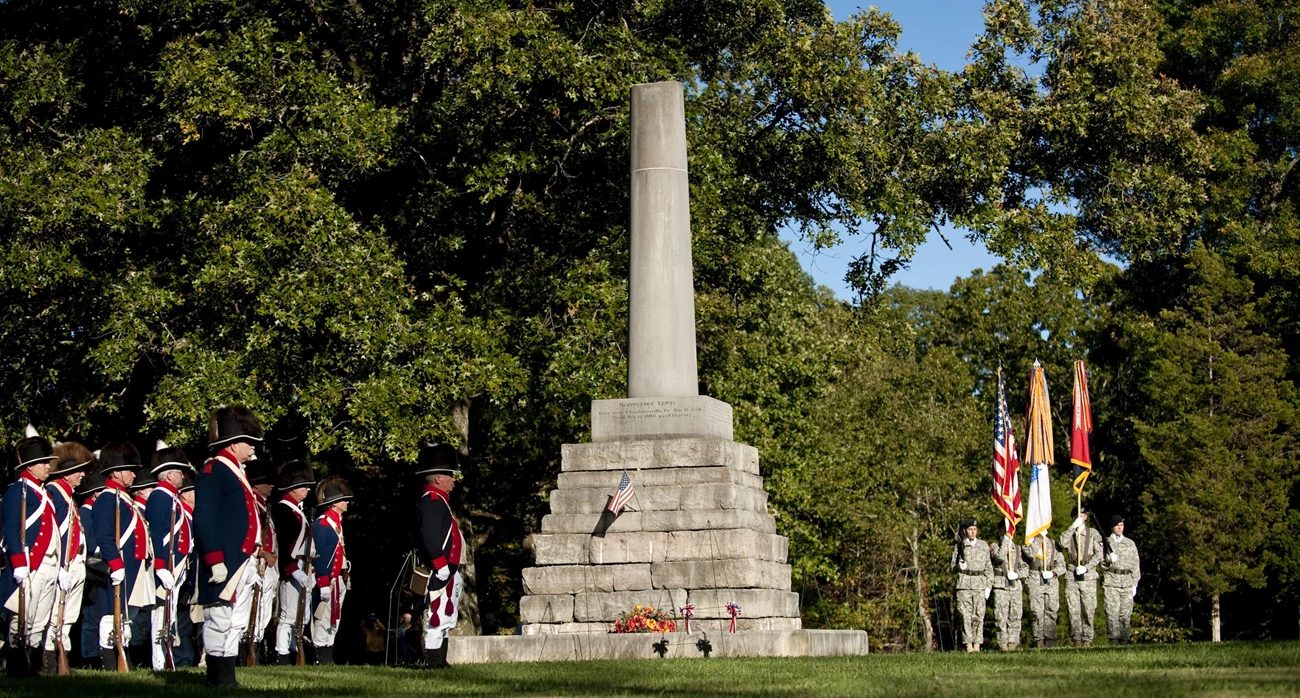
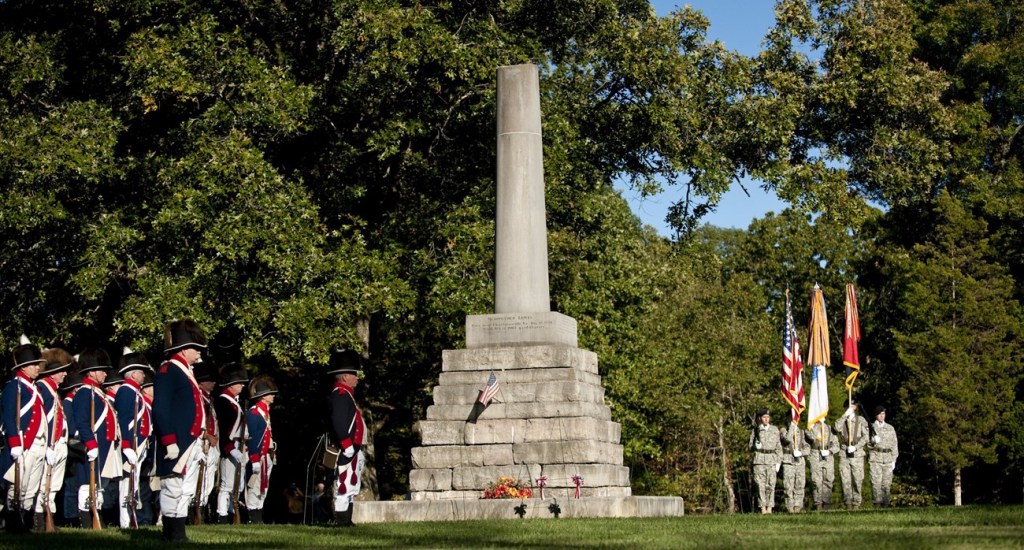
The successful explorer, Territorial Governor, son, and friend did not receive the Honors of a Military Funeral until 2009. The Lewis and Clark Trail Heritage Foundation organized a memorial service through the thoughtful leadership of Dr. Bryant Boswell and Mr. Tony Turnbow. A formal military burial rite allowed the Lewis family and friends the opportunity to pay their respect to an American hero. While the memorial ceremony was nearly 200 years late, it should be the beginning of a grateful Nation respecting Lewis’ Leadership and his accomplishments that made the United States a truly continental Nation.

Meriwether Lewis Grave and Memorial, Lewis Site, Natchez Trace Parkway, 2009

Meriwether Lewis Grave and Memorial, Lewis Site, Natchez Trace Parkway, 2009

Left: Lewis and Clark Discovery Expedition Right: U. S. Army 101st Airborne Honor Guard

St. Charles MO, Living History Educators

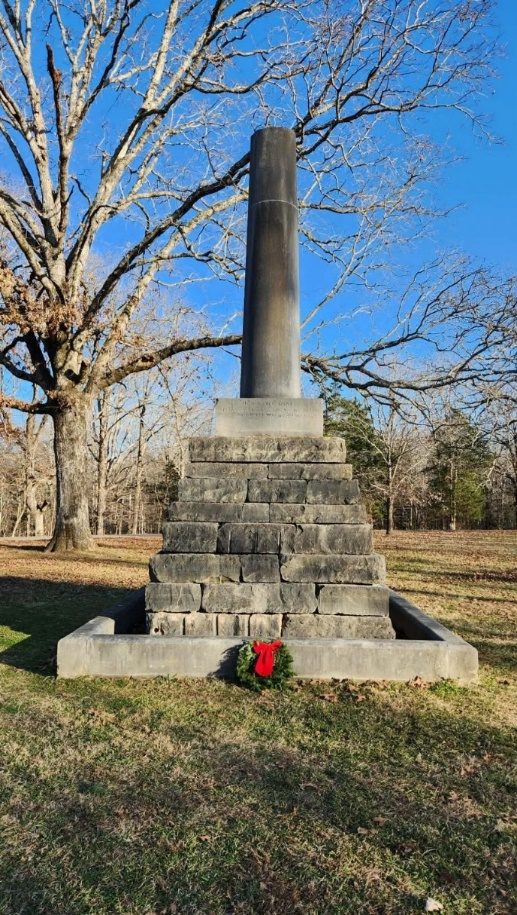
Honor and Respect Christmas Wreath Daughters of the American Revolution; Additional Reading:; https://ltamerica.org/visiting-meriwether-lewi (picture 1 of 2)
Honor and Respect Christmas Wreath Daughters of the American Revolution; Additional Reading:; https://ltamerica.org/visiting-meriwether-lewi (picture 2 of 2)

Honor and Respect Christmas Wreath Daughters of the American Revolution

Courtesy: Crystal Nash Marker, Natchez Trace

Courtesy: National Park Service

Additional Reading:

https://ltamerica.org/visiting-meriwether-lewis-grave-on-the-natchez-the-end-of-the-trail/

https://www.nps.gov/thingstodo/exploring-the-meriwether-lewis-death-and-burial-site.htm

https://www.youtube.com/watch?v=_KwCnKI14is (NPS Presentation)

Sources:

(1) Ambrose, Undaunted Courage; Bakeless, Partners in Discovery; Danisi, Meriwether Lewis; Fisher, Suicide OR Murder; Phelps, The Tragic Death of Meriwether Lewis (William & Mary QuarterlyV-12. #13; Guice, By His Own Hand?; Jenkinson, The Character of Meriwether Lewis, Jones, William Clark and Shaping of the West; Holmberg, Dear Brother: Letters of William Clark to Jonathan Clark.

(2) Guice, John, S. W., By His Own Hand, Oklahoma University Press, Norman 2006.

(3) Jackson, Donald, Letters of the Lewis and Clark Expedition, Second Edition University of Illinois Press, Urbana, 1978, page 468.

(4) http://biographiesofthenation.pbworks.com/f/NormAnderson_IPY1_POST.pdf page 13.

Stop 5 of 5

Protecting Lewis' Possessions

Inventory near Nashville and Washington, D C

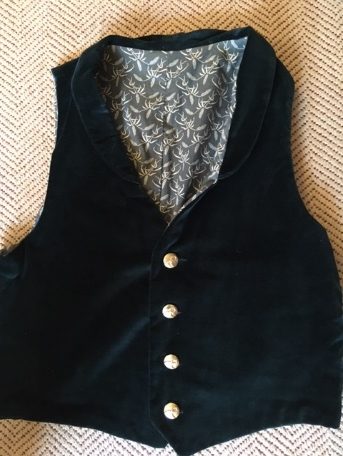
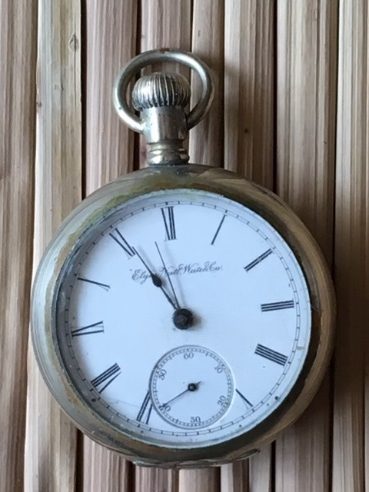
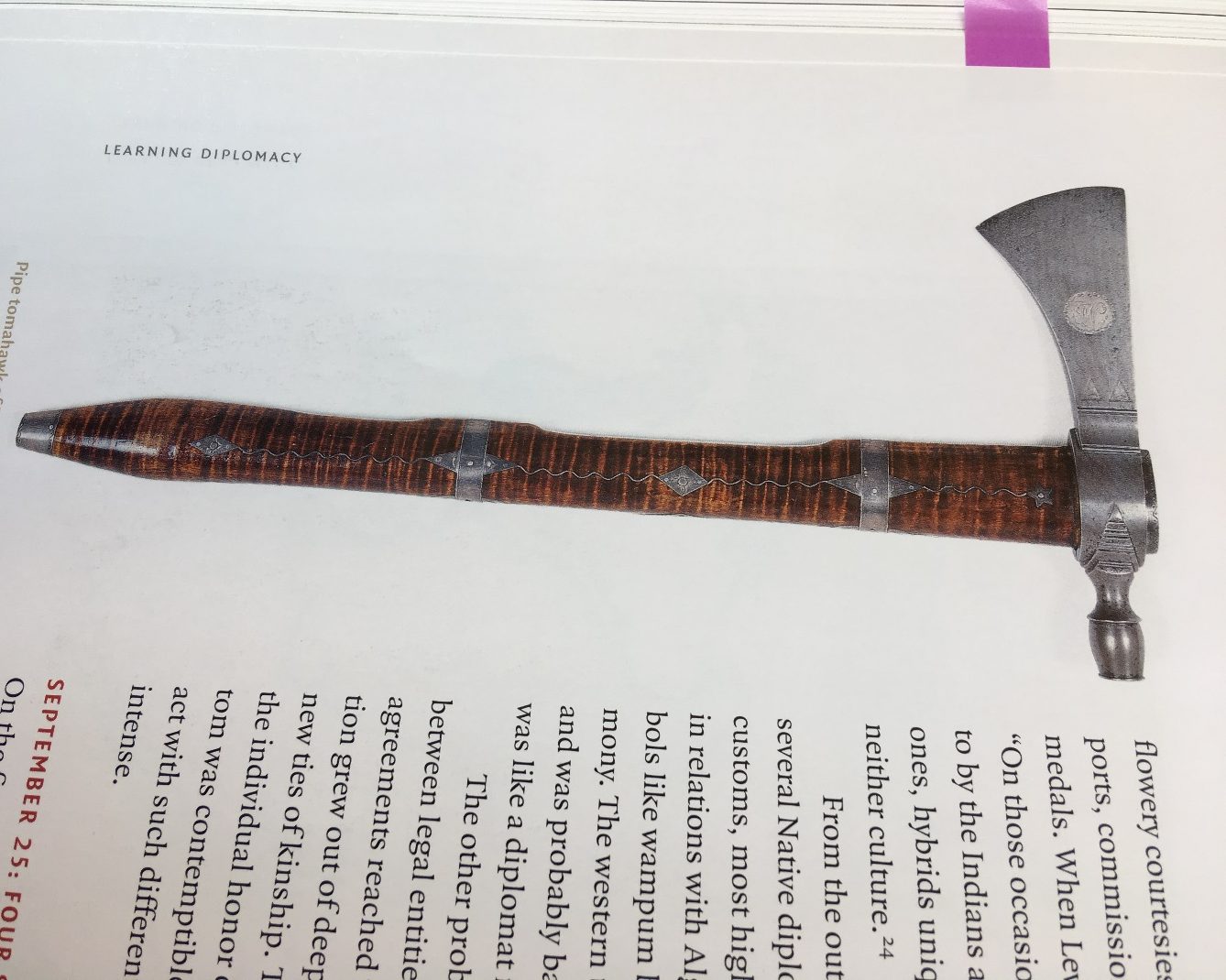
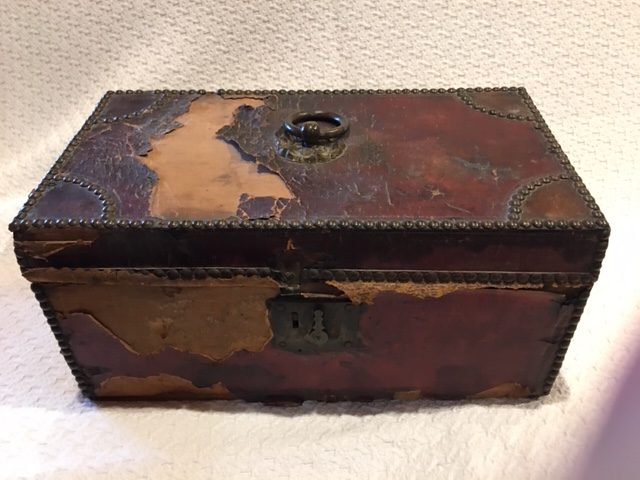
Lewis had packed his possessions for traveling in two (2), small trunks, including the rejected Bills of Exchange and the expedition journals. After Lewis’ death and hasty burial, James Neeley and John Pernier took the trunks to the vicinity of Nashville. On 18 October James Neeley wrote Thomas Jefferson describing Lewis' death. (1)

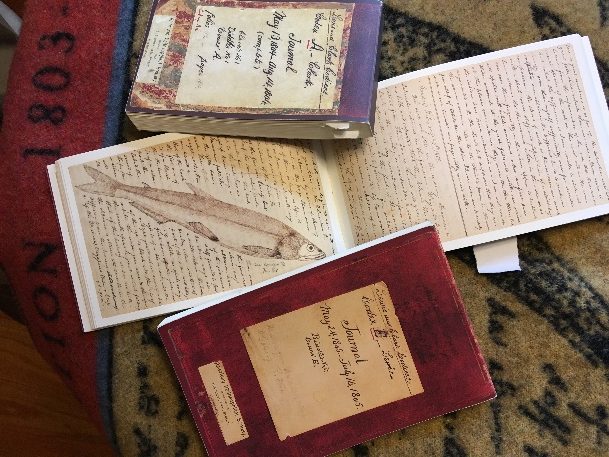
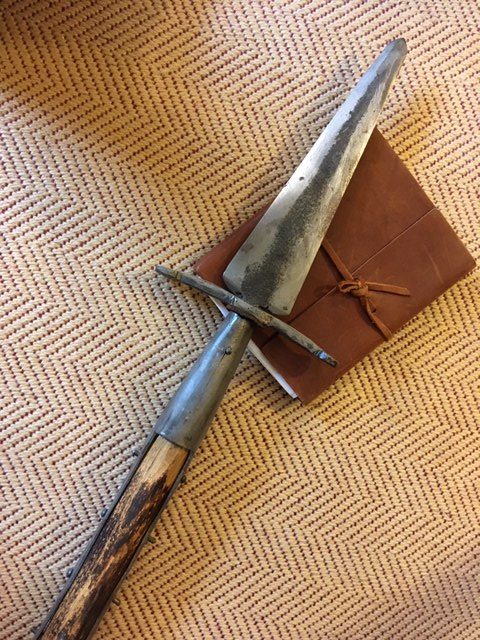
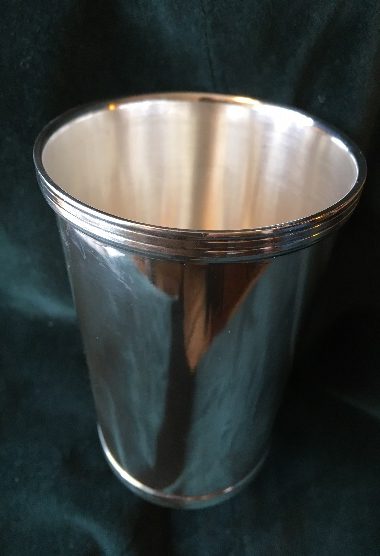
On 23 November 1809, Memorandum of Lewis' Personal Effects was recorded in the presence of Capt. Boote, Capt. Brahan, Thomas Freeman, and William P. Anderson. (2)(3) After the inventory, Thomas Freeman, Federal Surveyor and leader of the Freeman-Custis Exploration on the Red River of the South, took charge of the possessions to assure their safe conveyance to Washington. James Neeley's letter of the 18th was received by Thomas Jefferson, who forwarded the letter to President James Madison. James Madison directed James Neeley to see that the possessions were transported to the White House for further examination and appropriate distribution of the contents. (4) The two trunks were released by Thomas Freeman to John Pernjer to be transported to Washington. On 5 January 1810, Isaac Coles, Secretary for President Madison, and William Clark, who had arrived in Washington on 18 December 1809, separated the contents of the trunks. Clark, with permission of William D. Meriwether, executor of Lewis’ estate took charge of the Lewis and Clark Journals but did not find the botanical notes, celestial observation calculations, which he hoped Lewis had left in Philadelphia. (5) Other documents were sent to the various government departments. The personal papers and items were sent to Thomas Jefferson for future delivery to William D. Meriwether, estate executor. The personal possessions were conveyed to Lucy Meriwether Lewis Marks, Meriwether Lewis' mother. The second inventory by Coles and Clark further revealed that there was a "little memorandum book with some money and Lewis' Will". (6)

Example of Inventoried Lewis Possession

Example of Inventoried Lewis Possession (picture 1 of 7)
Example of Inventoried Lewis Possession (picture 2 of 7)
Example of Inventoried Lewis Possession (picture 3 of 7)
Example of Inventoried Lewis Possession (picture 4 of 7)
Example of Inventoried Lewis Possession (picture 5 of 7)
Example of Inventoried Lewis Possession (picture 6 of 7)
Example of Inventoried Lewis Possession (picture 7 of 7)

Courtesy: Dr. Bryant Boswell and the Lewis and Clark Trust

Source:

(1) Jackson, Donald, Letters of the Lewis and Clark Expedition, University of Illinois Press, Urbana, 1978, Vol. 2, page 46

(2) Ibid, pages 470-471.

(3) Holmberg, James J., Dear Brother: Letters of William Clark to Jonathan Clark, publishes in association with the Filson Historical Society, Yale University Press, 2002, page 227.

(4) Jackson, Donald, Letters of the Lewis and Clark Expedition, University of Illinois Press, Urbana, 1978, page 475.

(5) Holmberg, James J., Dear Brother: Letters of William Clark to Jonathan Clark, published in association with The Filson Historical Society, Yale University Press, 2002, page 233.

(6) Jackson, Donald, Letters of the Lewis and Clark Expedition, University of Illinois Press, Urbana, 1978, page 486 & 487.