
Stop 10 of 16
Co-Commanders Meet, 14 October 1803
Louisville, KY
When Meriwether Lewis finely arrived in Louisville, he was in the city founded by General George Rogers Clark during the American Revolution. William Clark had grown to manhood in Louisville after his parents and the younger Clark children moved from Caroline County, VA 1785.
Mulberry Hill: The Clark Family Home at Louisville, Kentucky, 1890
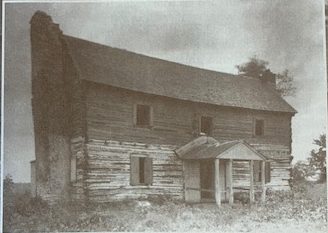
Courtesy: Dr. Ernest M. Ellison, DMD
Falls of the Ohio, by J. Brooks, engraved by John Goodman, 1806
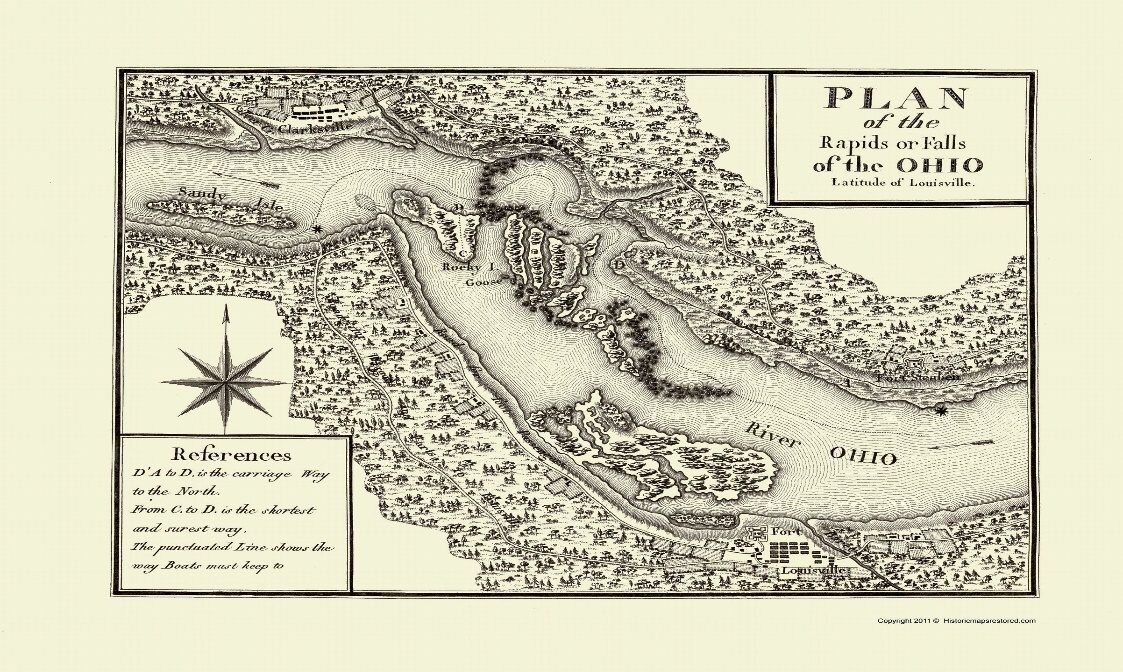
Courtesy: University of Kentucky Historic Maps # 9
The 1802, 3rd edition of The Ohio and Mississippi Navigator by Zadok Cramer states that Louisville was the port of entry. On a cloudy Friday, 14 October, Lewis brought the keel boat and pirogue in to the natural harbor formed by Beargrass Creek and Corn Island. (1)
On 15 October the keel boat and pirogue were moved through the "Indian Chute" to the mouth of Mill Creek below the Point of Rocks where George Rogers Clark and William Clark were living in the Clark Grant, Old Northwest Territory. The most likely pilot was James Patten a highly respected and Kentucky licensed pilot. The pilot's legal fee was $2.00. (2)
James Patten, Licensed Pilot
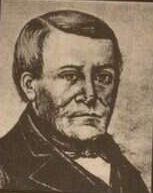
Courtesy: Army Corps of Engineers
At the mouth of Mill Creek, near the future Clarksville, IN, the Lewis and Clark recruiting station was established. During the next 12 days the nucleus of the expedition members were recruited and sworn into the First Regiment of Infantry.
View from “Point of Rocks”, Clarksville, IN George Rogers Clark Cabin
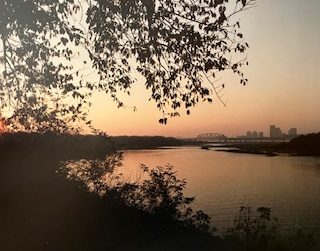
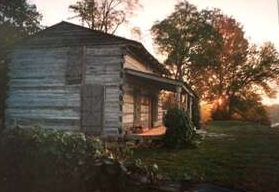
Courtesy: Richard Prestholdt, Prestholdt Images. Courtesy: Lewis and Clark Trust
For more information on the expedition recruits see:
Lewis and Clark in Kentucky: https://lewisandclarkinkentucky.org/
Along with the goodbyes and last-minute packing, there were considerations of a more serious matter. On 26 October 1803, William Clark filed a Power of Attorney at the Jefferson Co. KY County Court Clerk Office. In September William had appointed Jonathan Clark, his older brother, as his power of attorney. (3) Clearly, Clark recognized the dangers of the journey he and the new members of the expedition were about to face.
Today the Falls of the Ohio State Park and Interpretive Center is an excellent place to learn about Lewis and Clark at the Falls of the Ohio. https://www.in.gov/dnr/state-parks/programs/nature-centers/falls-of-the-ohio-interpretive-center/
Source:
(1) Jones, Landon, William Clark and the Shaping of the West, Hill and Wang, NY 2004, page 18.
(2) U. S Army Corps of Engineers Louisville, District, Triumph At The Falls: The Louisville and Portland Canal. Leland R. Johnson and Charles E. Parish, page 8-10.
(3) Jonathan Clark Papers- Temple Bodley Collection, The Filson Historical Society.