
Stop 12 of 16
Ft. Massac and "A Man of Much Merit", 11 November 1803
Ft. Massac State Park, IL
Leaving West Point on 27 October and traveling to Ft. Massac, present day Massac Co. IL, was uneventful except for Clark's health. Digestive ailments were an old situation but it did not stop Clark from his duties. (1)
During the 15-day passage to Ft. Massac they passed the future Trail of Tears site at Berry's Ferry and the future site of Paducah, KY, another Trail of Tears Crossing. Immediately on arriving at Ft. Massac, Lewis "engaged" George Drouillard, a man of French/Indian parentage, to travel to Ft. Southwest Point, TN. George’s mission was to escort the 8 soldiers to the expedition winter encampment in IL. (2)
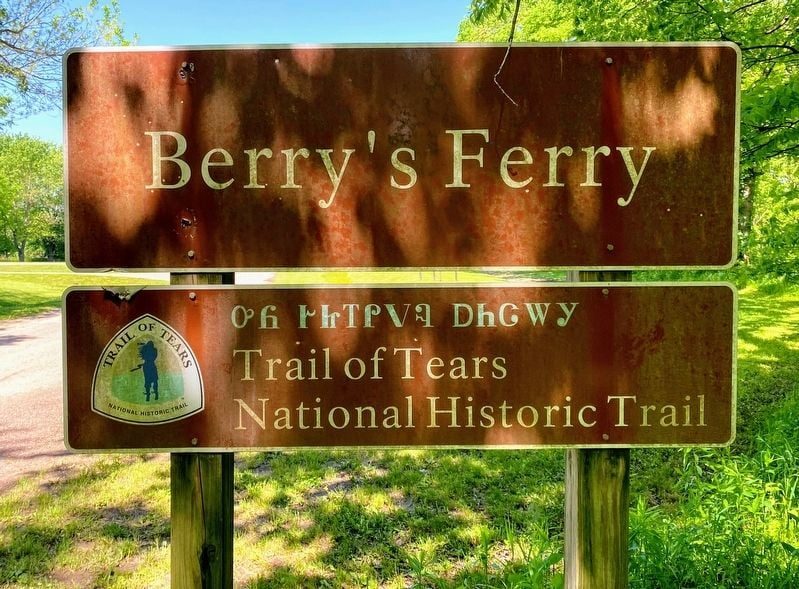
Courtesy: National Park Service
After the selection of William Clark, as co-commander of the expedition, the hiring of George Drouillard was the wisest decision Meriwether Lewis made to bring about a successful expedition. George's total payment was $833.331/3 for 33 months of service. In Lewis' report to Secretary of War Dearborn, 15 January 1807, Lewis used 124 word to define his appreciation for George's service as a civilian contractor. (3)
Lewis and Clark Bronze Statue, National Quilt Museum, Paducah, KY
Commissioned by Bill and Meridth Schroder
George Lundeen, Sculpture
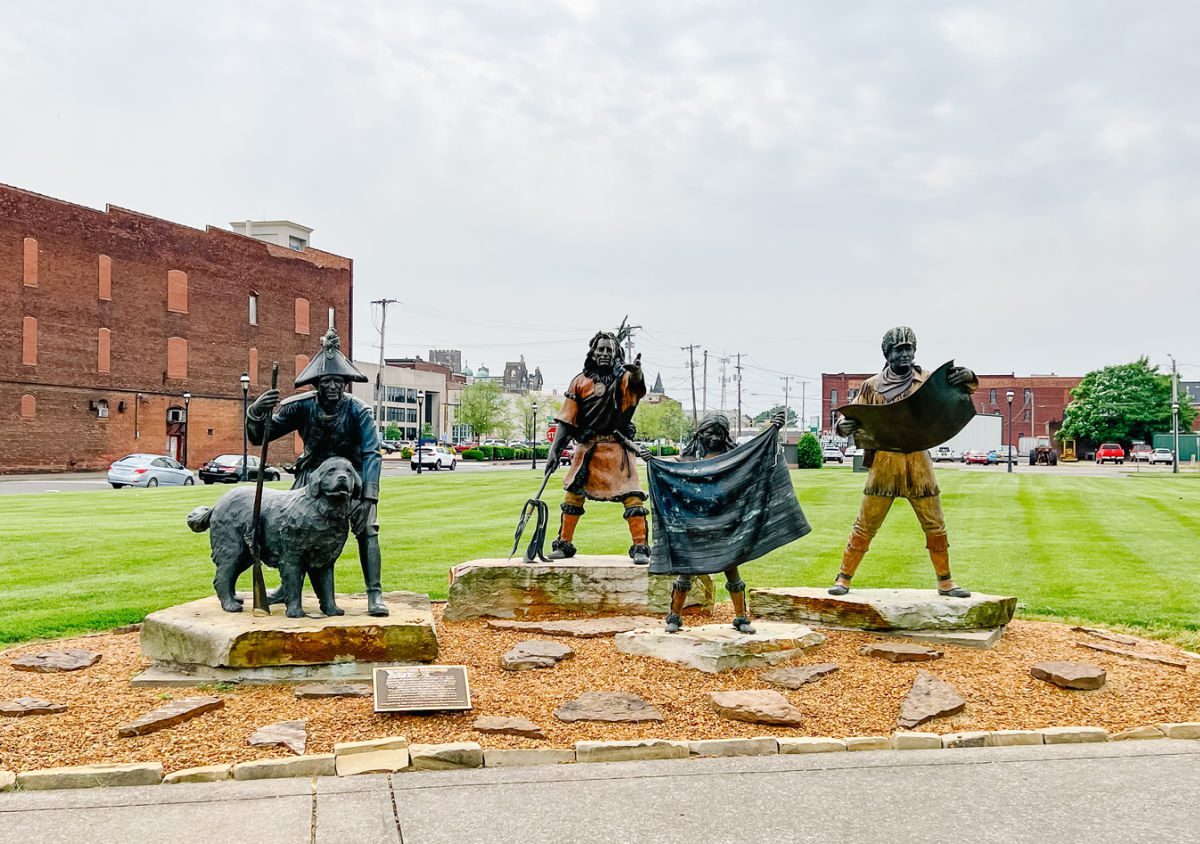
Courtesy: National Quilt Museum
Flood Wall Paintings, Paducah, KY
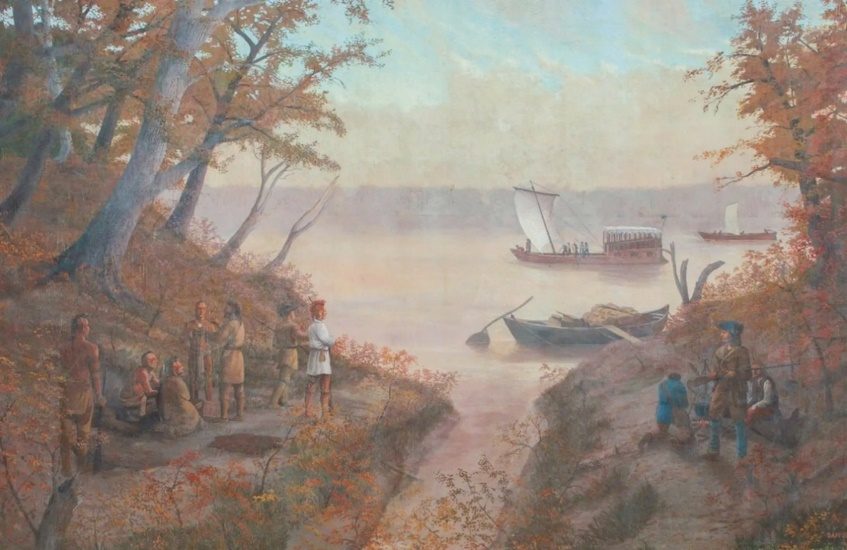
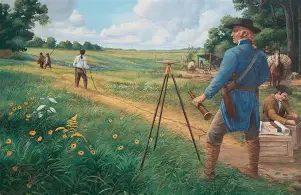
Lewis and Clark Keel Boat and Red Pirogue William Clark, Surveyor
Courtesy: Robert Dafford, Painter
At the Mouth of the Tennessee River, William Clark had passed the future site of Paducah, a city he would survey and establish in 1827.
Ft. Massac, Metropolis, IL
https://dnr.illinois.gov/parks/park.fortmassac.html
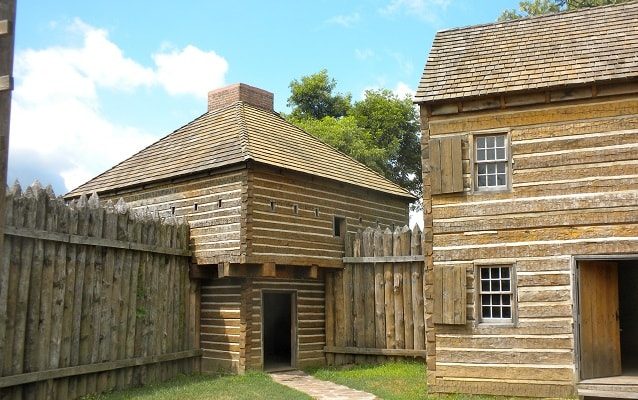
Courtesy: Lewis and Clark National Historic Trail, National Park Service
Ft. Massac, in 1757 the French erected a fort and named it Fort Ascension near the mouth of the Tennessee River. It was strengthened in 1759 and renamed Fort Massac in honor of a French minister. In 1765, under terms of a recently signed treaty, they surrendered it to the British. In 1778, George Rogers Clark, the older brother of William Clark, and his men captured the fort. In 1794 President George Washington ordered that Fort Massac be fortified and rebuilt, and it was renamed an anglicized “Massac.” It became a major port of entry for settlers entering Illinois country.
Source:
(1) Jones, Landon, William Clark and Shaping the West, Hill and Wang, New York, 2004, page 120.
Moulton, Gay, The Journals of the Lewis and Clark Expedition, University of Nebraska Press, Lincoln, 1986, page 85.
(2) Jackson, Donald, Letters of the Lewis and Clark Expedition, Second Printing. University of Illinois Press,  1978, V-l, P-368.
(3) Ibid, p-368.